
Why Choose a CNC Machine for Your Business?
Choosing a CNC machine can change how a business designs, produces, and delivers precision parts. Unlike manual equipment, it follows programmed instructions with consistent motion and repeatable results. That consistency matters when customers expect matching dimensions across hundreds of components.
In practical workshop experience, a CNC machine can reduce repetitive labor and improve production planning. An operator can load material, check tooling, review the program, and monitor the cutting process. With proper training, one skilled employee may manage several stages more efficiently. Digital controls also help businesses record settings, identify quality issues, and adjust future batches with greater confidence. However, automation does not remove responsibility. Poor measurements, unsuitable tools, or careless programming can still produce expensive mistakes.
The strongest investment decisions consider more than the machine’s purchase price. Businesses should evaluate spindle power, work area, software compatibility, maintenance access, operator training, energy use, and supplier support. Industry guidance and verified technical specifications provide a more reliable basis than impressive sales claims. Safety features and documented operating procedures deserve equal attention. The numbers may look attractive.
A CNC machine is not a universal solution. A small workshop with varied, low-volume work may need flexibility more than maximum speed. A growing manufacturer may value repeatability and scalable capacity. The right choice depends on materials, tolerances, production volume, and available expertise. Careful evaluation can reveal clear benefits, but it may also expose hidden costs. That honest review is often the difference between useful automation and an expensive lesson.
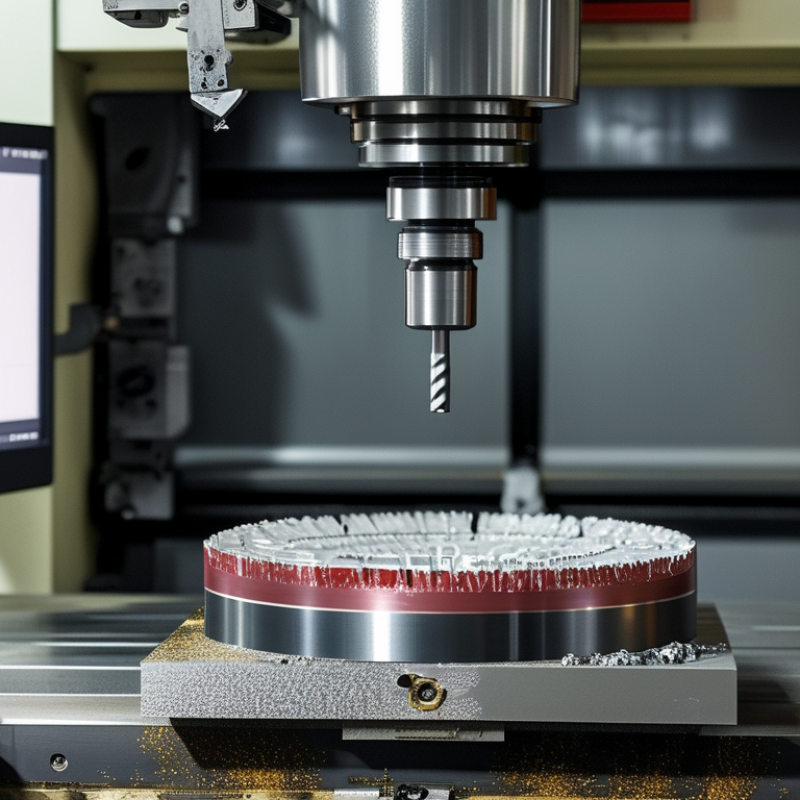
Table of Contents
[Hide]
What a CNC Machine Is and How It Works
A CNC machine is a computer-controlled manufacturing system. It converts a CAD design into programmed movements. CAM software creates toolpaths, often using G-code. The controller then directs motors across three, four, or five axes. Cutting tools remove material from metal, plastic, or wood. Sensors and feedback systems help maintain position, speed, and accuracy. In a real workshop, the operator still checks tool wear, clamping pressure, coolant flow, and the first finished part. Automation reduces repetitive hand movements, but it does not remove human judgment.
CNC machines can produce identical parts with tight tolerances and predictable cycle times. According to Grand View Research, the global CNC machine market was valued at approximately 83.99 billion dollars in 2023. The report also forecasts strong growth through 2030. That demand reflects wider adoption in automotive, aerospace, medical, and general fabrication. Yet buying a CNC machine is not automatically profitable. I have seen production plans fail because programming time, maintenance, and material waste were underestimated. The machine may be precise. The process can still be poorly designed.
Tips: Start with your parts, not the machine brochure. Record material types, dimensions, tolerances, monthly quantities, and average setup time. Test one sample job before expanding. Choose suitable spindle power and working travel. Train operators to verify offsets and inspect critical features. Keep maintenance records. A clean table, sharp tooling, and stable workholding often matter more than impressive specifications. When data conflicts with experience, investigate both.
Why Choose a CNC Machine for Your Business? - What a CNC Machine Is and How It Works
| Data Dimension | What It Means | How a CNC Machine Works | Business Value |
|---|---|---|---|
| Definition | Computer Numerical Control, commonly called CNC, is a manufacturing method in which programmed instructions control machine-tool movement. | A controller interprets numerical instructions and sends coordinated commands to motors that move the cutting tool, workpiece, or both. | Automates repeatable machining tasks and reduces dependence on continuous manual control. |
| Input Method | Typical inputs include CAD designs, CAM toolpaths, machining parameters, and machine-specific G-code or M-code. | CAD/CAM software converts a digital part design into toolpaths, which are then transferred to the CNC controller. | Digital programming makes design changes, revisions, and production documentation easier to manage. |
| Motion Control | Most CNC machines use multiple controlled axes, such as X, Y, and Z; advanced equipment may add rotational axes. | Servo or stepper motors move along programmed coordinates while the control system synchronizes speed, direction, and position. | Multi-axis movement enables complex shapes, angled features, pockets, holes, and contours to be produced accurately. |
| Typical Operations | Common operations include milling, turning, drilling, boring, tapping, routing, grinding, and cutting. | The machine follows a programmed sequence to position the tool, remove material, change tools when required, and complete the part. | One automated platform can support a broad range of components and production requirements. |
| Repeatability | Once a program is verified, the same sequence can be repeated for multiple workpieces. | The controller executes the same coordinates and cutting instructions for each production cycle, subject to machine condition and setup quality. | Helps maintain consistent dimensions across batches and reduces variation caused by manual operation. |
| Dimensional Accuracy | Accuracy depends on machine design, calibration, tooling, material, cutting conditions, thermal effects, and workholding. | Position feedback, rigid construction, calibrated tools, and controlled parameters help the machine stay within the specified tolerances. | Supports the production of parts that require controlled fits and repeatable dimensions, although inspection remains necessary. |
| Production Flexibility | CNC equipment can produce prototypes, custom parts, small batches, and larger production runs. | Operators can load a different verified program, change tooling or fixtures, and adjust approved cutting parameters for a new part. | Allows businesses to serve varied orders without creating a completely new manual process for every component. |
| Setup Requirements | Important setup elements include workholding, tool selection, tool offsets, zero points, cutting parameters, and program verification. | The operator secures the material, installs tools, establishes references, checks clearances, and runs the program safely. | Well-controlled setup procedures improve consistency and help prevent scrap, tool damage, and machine collisions. |
| Material Compatibility | Depending on the machine and tooling, CNC equipment can process metals, plastics, wood, composites, and other machinable materials. | Spindle speed, feed rate, depth of cut, coolant, and tooling are selected according to the material and operation. | Broad material capability can help a business support different industries and product applications. |
| Labor Role | CNC automation changes the operator’s role from continuous hand control to programming, setup, monitoring, inspection, and maintenance. | The machine performs programmed movements while trained personnel oversee the process and respond to alarms or quality issues. | Improves labor productivity while still requiring skilled staff for process planning, troubleshooting, and quality control. |
| Production Efficiency | Automated cycles can reduce repeated manual actions and provide more predictable processing times. | After setup and verification, the machine performs cutting operations using programmed feeds, speeds, and tool sequences. | Can shorten production lead times and make scheduling more predictable, especially for repeat work. |
| Quality Control | CNC machining improves process consistency but does not eliminate the need for measurement and inspection. | Operators use gauges, coordinate-measuring equipment, probes, or other inspection methods to verify dimensions and surface requirements. | Combining automated machining with inspection helps identify tool wear, setup errors, and process drift. |
| Safety Considerations | CNC machines contain moving parts, sharp tools, chips, coolant, electrical systems, and other hazards. | Enclosures, interlocks, emergency stops, guarding, safe programming, and operator training help control exposure to hazards. | Proper safety procedures reduce operational risk and support compliance with workplace safety requirements. |
| Maintenance Needs | Routine maintenance may include lubrication, cleaning, coolant management, inspection of tooling, and calibration checks. | Maintenance keeps mechanical, electrical, and control components operating within expected conditions. | Preventive maintenance helps protect uptime, machining accuracy, tool life, and long-term equipment performance. |
| Key Investment Factors | Relevant factors include machine type, working envelope, spindle capacity, number of axes, automation options, software, tooling, and training. | The selected configuration should match part size, material, tolerance, production volume, and available floor space. | A requirements-based selection helps avoid paying for capabilities that are unnecessary or choosing equipment that is too limited. |
Related Posts
-

10 Essential Tips for Choosing the Right CNC Machining Center
-
Revolutionizing Manufacturing with CNC Boring Mill Innovations at the 138th Canton Fair 2025
-
Addressing Common Challenges Associated with Best CNC Equipment in Manufacturing
-
Ultimate Checklist for Selecting the Best CNC Turning Machine for Your Business
-
Ultimate Guide to Sourcing Top Quality CNC Boring Mills: Tips for Global Buyers
-

Mastering Precision: A Step-by-Step Guide to Operating a 5 Axis Milling Machine