
A Tote Shuttle is a compact automated storage and retrieval system designed for handling plastic totes. It moves along storage aisles, retrieves containers, and delivers them to workstations or conveyors. Picture a small robotic vehicle sliding beneath a tote, lifting it, and carrying it across a dense steel rack.
This technology matters because warehouses now face tighter space, faster order cycles, and persistent labor shortages. The MHI Annual Industry Report 2024 found that 55% of supply chain leaders expect disruption to increase. It also reported continued investment in automation and robotics. Interact Analysis has forecast strong growth in warehouse automation through 2027, driven by e-commerce and fulfillment pressure. The figures are persuasive, but they do not guarantee success.
John Paxton, former CEO of MHI and a recognized supply chain technology leader, said, “The supply chain is no longer a back-office function.” That observation explains why Tote Shuttle systems deserve practical attention. They can improve storage density, reduce walking, and support consistent picking performance. They may also create new maintenance demands.
A shuttle is not magic.
Its results depend on tote quality, software integration, battery management, and correctly designed workflows. A damaged container can interrupt a smooth-looking system. Poor slotting can make an expensive installation disappointingly slow. This guide explains what a Tote Shuttle is, how its movements are coordinated, and where its advantages become less certain.
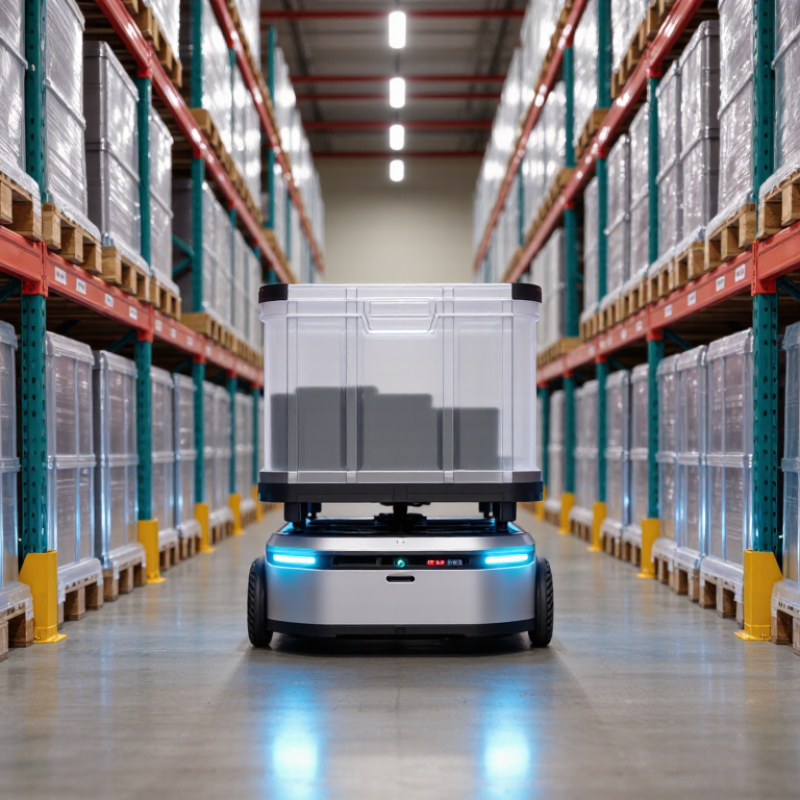
A tote shuttle is an automated storage and retrieval system designed to move plastic totes inside a warehouse. Its main purpose is simple: store inventory densely, then deliver the correct tote to a picking or replenishment station. Shuttles travel along rails within storage lanes. Elevators transfer totes between levels. Software directs each movement using order priority, inventory location, and equipment status.
This system supports fast, repetitive handling in e-commerce, retail, and manufacturing operations. MHI’s 2024 Annual Industry Report states that 55% of supply-chain professionals expect to adopt robotics and automation within five years. That figure shows strong interest, but adoption is not automatic. A tote shuttle needs accurate inventory data, stable tote dimensions, and disciplined maintenance. A damaged tote can create a small blockage that affects several storage positions. The technology is powerful, but not magical. Some facilities may overestimate its value when order volumes remain low or product sizes vary widely.
Tips: Measure peak demand, not average demand. Check tote weight, height, and condition before system design. Keep access routes clear around elevators and service areas. Review failed movements weekly. This practical review often reveals problems that software dashboards miss. Also, allow manual recovery procedures; real warehouses rarely behave perfectly.
A tote shuttle system moves plastic totes through dense storage lanes, using a compact vehicle that travels on fixed rails. Its main components must work as one coordinated unit. Even a strong shuttle can underperform when the surrounding equipment is poorly matched.
The tote is the basic load unit. It protects products and provides a consistent footprint for handling. The shuttle cart carries each tote along horizontal rails.
Drive motors, wheels, and position sensors control its movement. At the lane entrance, conveyors transfer totes to the shuttle. Vertical lifts connect different storage levels when the system has several floors. Some designs use separate lifts for inbound and outbound traffic.
A control system directs every movement. Warehouse software sends storage and retrieval tasks, while the equipment controller manages speed, location, and traffic rules.
Barcode readers or other identification sensors confirm each tote. Safety scanners detect people, fallen objects, or open access points. Charging equipment keeps shuttle batteries ready for repeated cycles.
It sounds simple.
In practical installation work, alignment matters more than many teams expect. A small rail gap can create noise, vibration, or missed positions. Tote dimensions also need careful testing, because lids and damaged corners may affect movement. The system is not magic. Poor inventory data can still cause delays, even when the mechanical components operate correctly. Engineers should review throughput, maintenance access, battery behavior, and emergency stops before approving the final layout.
A tote shuttle is an automated storage system that moves plastic totes through compact warehouse lanes. Each tote travels on a shuttle vehicle running along rails inside a rack. The shuttle receives a location command, checks its position, and carries the tote to an open storage slot. When an order arrives, the process reverses. The shuttle retrieves the tote and sends it toward a lift or conveyor.
The lift changes levels, while conveyors move totes between storage aisles, picking stations, and packing areas. Sensors confirm tote presence, rail position, and transfer accuracy. Warehouse control software coordinates these movements with inventory records. In a well-tuned system, totes flow steadily instead of waiting in long queues. Still, real operations are less perfect. A damaged tote, poor barcode reading, or slight rail misalignment can interrupt movement. Regular inspections and practical maintenance matter more than impressive speed claims.
Tips: Keep tote sizes consistent. Leave enough clearance for smooth transfers. Test barcode labels under real lighting conditions. Monitor waiting time, not only shuttle speed. A faster shuttle may create congestion downstream. Operators should review failed movements and adjust routes, storage rules, or maintenance intervals based on actual data.
A tote shuttle is an automated system that stores and retrieves plastic totes inside dense shelving. Each shuttle travels along a storage lane, carrying totes to assigned positions. Vertical lifts connect different levels, while conveyors move totes toward picking stations.
Storage begins when software assigns a location based on size, demand, and available space. Sensors confirm the tote’s position. During retrieval, the shuttle collects the requested container and sends it to an operator or robotic picking point. The worker picks individual items, then the tote returns to storage or moves directly to packing. This supports faster order fulfillment and reduces walking.
A 2023 Warehousing Vision Study reported that 58% of warehouse decision-makers planned to deploy automation by 2028. The figure is significant, but equipment alone cannot fix poor inventory data. Small delays multiply.
A tote shuttle also needs clear exception rules. Damaged totes, missing items, blocked lanes, and barcode errors can interrupt the process. In practice, the best results come from accurate slotting, preventive maintenance, and realistic throughput testing. Some operations overestimate peak performance. That mistake is costly.
Tips: Keep fast-moving items near picking stations. Test tote dimensions before installation. Measure retrieval time during peak periods, not quiet shifts. Review failed picks weekly, because they often reveal hidden process problems.
What Is a Tote Shuttle and How Does It Work?
A tote shuttle is an automated storage system for small containers. It uses motorized shuttles, lifts, conveyors, and warehouse software. A shuttle travels along storage lanes and retrieves totes from dense shelving. The system then delivers each tote to a picking or packing workstation. Barcode readers confirm tote identity and location. Sensors also detect obstructions, incorrect positioning, and equipment movement.
Its main benefit is controlled, high-density storage. Tote shuttles can reduce walking, improve inventory accuracy, and support faster order fulfillment. They suit e-commerce, spare-parts, pharmaceutical, and high-volume retail operations. Gartner reported that 50% of new warehouses in developed markets could be designed as robot-centric facilities by 2028. The MHI 2024 Annual Industry Report also found that 76% of respondents expect to use robotics and automation by 2028. These figures show strong industry momentum.
Performance still depends on thoughtful design. Poor tote sizing can create jams. Weak software integration can delay picking. In commissioning practice, teams should test peak-hour demand, battery charging, maintenance access, and recovery procedures. The promise is not automatic perfection. A well-designed tote shuttle supports stable throughput, but it cannot repair inaccurate inventory data. Warehouses should compare shuttle capacity with order profiles, SKU dimensions, and future growth before investing.
| Dimension | Typical Data or Specification | Description |
|---|---|---|
| System definition | Automated tote storage and retrieval system | A tote shuttle is a powered carriage that moves horizontally inside a storage rack to store and retrieve plastic totes, bins, trays, or cartons. |
| Primary movement | Horizontal travel within a rack level | The shuttle travels along rails or a guided track, positioning itself at a storage location and transferring the tote with a load-handling mechanism. |
| Vertical movement | Performed by lifts, elevators, or robotic transfer units | A lift moves totes between levels, while conveyors or transfer devices connect the rack to receiving, picking, packing, and dispatch areas. |
| Typical tote capacity | Commonly about 20–50 kg per tote, depending on system design | The permitted load depends on shuttle construction, tote dimensions, load distribution, rack design, and required acceleration. |
| Tote sizes | Often based on modular footprints such as 600 × 400 mm or 400 × 300 mm | Standardized tote footprints simplify rack design, conveyor integration, barcode identification, and automated handling. |
| Storage density | High-density storage with multiple rack levels and deep lanes | The system uses vertical space and can place totes in dense lanes, reducing unnecessary aisles compared with many conventional shelving layouts. |
| Typical horizontal speed | Approximately 2–4 m/s in many applications | Actual speed varies according to payload, travel distance, safety requirements, acceleration limits, and the selected equipment configuration. |
| Control system | Warehouse control software plus warehouse management system integration | Software assigns storage locations, sequences tote movements, manages inventory records, and coordinates shuttles, lifts, conveyors, and picking stations. |
| Identification methods | Barcode, two-dimensional code, RFID, or sensor-based identification | Identification technologies support tote tracking, inventory accuracy, location confirmation, and exception handling. |
| Basic operating cycle | Receive → identify → store → retrieve → deliver | The shuttle receives a tote, moves it to an assigned location, retrieves it when requested, and delivers it to a workstation or outbound conveyor. |
| Throughput measure | Totes or tote movements per hour | Throughput depends on the number of shuttles, rack levels, travel distances, lift capacity, tote presentation, sequencing, and the proportion of storage versus retrieval tasks. |
| Picking method | Goods-to-person picking | The system brings totes to an operator or robotic picking station, reducing walking and searching time inside the storage area. |
| Inventory rotation | FIFO, LIFO, or rule-based sequencing | Software can apply first-in, first-out rules for dated goods or alternative rules based on order priority, batch, product class, or storage constraints. |
| Main benefits | Space efficiency, reduced travel, consistent handling, and improved traceability | Automation can improve storage utilization and process consistency while reducing manual movement and exposure to repetitive travel tasks. |
| Labor impact | Less walking, lifting, and manual put-away activity | Workers generally focus on induction, picking, replenishment, quality checks, and exception handling rather than traveling through storage aisles. |
| Typical applications | E-commerce, retail distribution, spare parts, pharmaceuticals, and manufacturing | Tote shuttle systems are well suited to high-SKU environments with frequent small-item storage and retrieval requirements. |
| Key design considerations | Demand profile, SKU dimensions, tote standardization, peak throughput, expansion, and maintenance access | A successful design must match equipment capacity and control logic to order patterns, peak periods, product characteristics, safety requirements, and future volume growth. |
"*" indicates required fields