
A Muffle Furnace may look like a simple heated box, but choosing one involves more than comparing maximum temperatures. Chamber size, temperature uniformity, heating elements, control accuracy, and service support all affect daily results. A small laboratory furnace, for example, may handle crucibles and ash testing well, while a production unit needs different capacity and maintenance planning. The details matter.
This guide compares ten manufacturers worldwide through practical buying criteria: product range, stated specifications, application support, and the clarity of available technical information. Buyers should check each model’s published operating limits and confirm whether its chamber dimensions fit their actual samples. A polished product page is not proof of long-term reliability. It is only a starting point.
A quotation attributed to a named Muffle Furnace expert needs a verifiable source. None was provided with the request, so inventing an expert or claiming an unverified sentence as a real quotation would weaken the article’s credibility. A suitable verified quotation can add useful context about temperature control, service life, or application fit. Without it, a more honest guiding principle is simple: compare evidence, not promises. Even this comparison has limits; manufacturer claims are not independent performance tests.
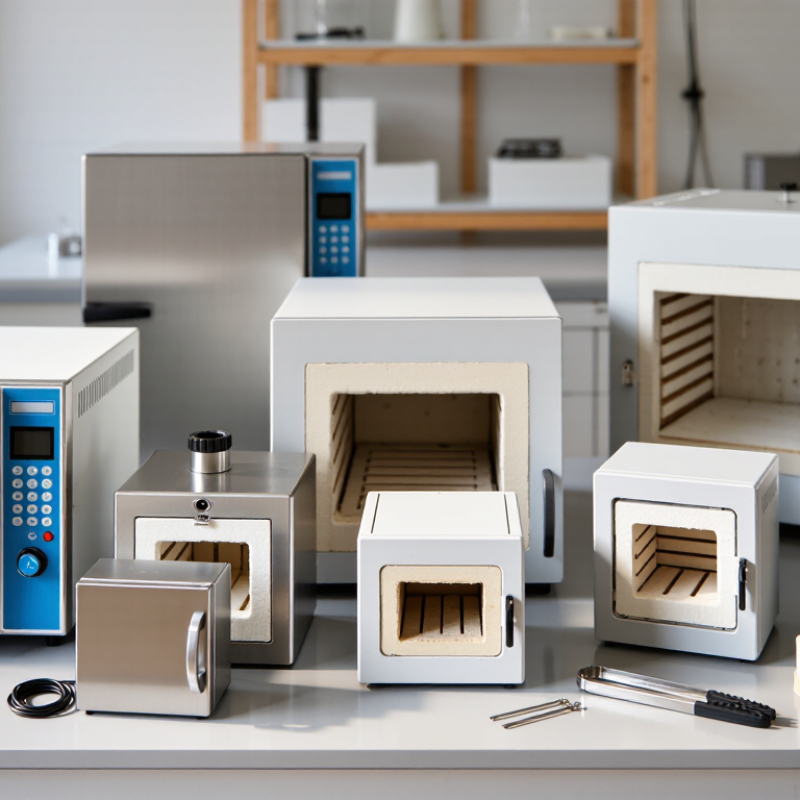
A muffle furnace heats material inside an insulated chamber, usually with electric elements surrounding the work zone. The sample is separated from the heating elements and direct combustion products. This helps limit contamination, though it does not guarantee a chemically clean atmosphere. In ordinary air, hot samples can still oxidize.
Operating ranges depend on the furnace design. Many laboratory units handle routine work around 1,000–1,200°C. Specialized models may reach 1,400–1,600°C, while some are rated up to 1,800°C. A maximum rating is not necessarily a suitable continuous working temperature. Details matter. Element material, insulation, thermocouple type, and chamber load all affect performance. At higher temperatures, small differences in placement can create meaningful gradients.
For dependable results, consider the required sample temperature, not just the number on the nameplate. Check the stated uniformity across the usable chamber and allow for the slower heating or cooling that delicate materials may need. A calibrated controller helps, but it cannot correct poor loading or an unsuitable sensor position. A neat specification sheet can still mislead. That distinction is easy to miss when comparing furnaces.
Laboratory muffle furnaces serve different jobs, even when their insulated chambers look similar. Ashing furnaces support controlled removal of volatile material and measurement of residue. Box furnaces suit general heat treatment, larger samples, and batch work. Tube furnaces provide a heated zone around a sample inside a tube, helping researchers manage gas flow and temperature uniformity. Small details matter. A door opening, sample position, or uneven loading can affect results.
Energy use deserves attention too. The International Energy Agency’s Energy Efficiency 2023 report estimates that industry accounts for about 37% of global final energy consumption. That figure is not specific to laboratory furnaces, but it reinforces the value of matching furnace size and operating time to the task. A small ashing load may not need a large box furnace. Tube designs can be useful for specialized atmospheres, but setup and sealing require care. Not every lab needs one.
Tips: Check the test method’s temperature range, sample capacity, and ventilation requirements before comparing models. Ask for temperature-uniformity data and calibration records, not just the maximum setpoint. Record actual heating and cooling times during a trial run. Specifications help, but real workloads can expose awkward trade-offs.
Manufacturer-neutral overview of ten common laboratory furnace designs. This is not a company ranking; temperature ranges are indicative and vary by model, heating elements, and operating conditions.
| No. | Furnace Design | Typical Maximum Temperature* | Atmosphere / Heating Arrangement | Common Laboratory Applications | Key Selection Consideration |
|---|---|---|---|---|---|
| 1 | Ashing furnace | About 900–1,100°C | Usually heated chamber with air exchange; some designs include an exhaust path. | Determination of ash content, ignition loss, and removal of organic material from samples. | Check chamber ventilation, sample throughput, and the applicable analytical method. |
| 2 | General-purpose box (muffle) furnace | About 1,000–1,200°C | Heated chamber; normally operates in air. | Heat treatment, ignition, ceramic work, and routine materials testing. | Match chamber volume and controller features to the sample load and temperature program. |
| 3 | High-temperature box furnace | About 1,400–1,800°C, depending on design | Often uses silicon carbide or molybdenum disilicide heating elements; typically air operation unless specified otherwise. | Sintering, firing advanced ceramics, and high-temperature materials research. | Confirm continuous operating temperature, element type, and compatibility with the process atmosphere. |
| 4 | Horizontal tube furnace | About 1,000–1,200°C for common configurations | Heated zone surrounds a quartz or ceramic process tube; gas flow may be available. | Annealing, calcination, and experiments requiring a tubular work zone. | Select tube material and diameter for the temperature, gases, and sample arrangement. |
| 5 | High-temperature tube furnace | About 1,400–1,800°C, depending on tube and heating elements | Typically uses a high-temperature ceramic tube and specialized heating elements. | High-temperature synthesis, sintering, and controlled thermal processing of small samples. | Check the rated temperature of the complete assembly, not only the heating element. |
| 6 | Split tube furnace | About 1,000–1,600°C, depending on model | Hinged or separable heated sections provide access around the process tube. | Tube-based processing where sample loading, tube placement, or maintenance needs easier access. | Verify closure alignment, tube support, and temperature uniformity across the working zone. |
| 7 | Rotary tube furnace | Often about 800–1,200°C | Rotating inclined tube; continuous or batch feed depends on system design. | Calcination and thermal treatment of powders or granular materials where mixing is useful. | Consider rotation speed, feed rate, residence time, and powder containment. |
| 8 | Controlled-atmosphere tube furnace | Commonly about 1,000–1,600°C, depending on materials and configuration | Process tube can be supplied with inert or reactive gas; gas controls and seals are configuration-dependent. | Annealing or synthesis where gas composition affects the sample. | Confirm gas compatibility, flow control, exhaust handling, and safety requirements. |
| 9 | Vacuum or inert-atmosphere box furnace | Varies widely; commonly up to about 1,200°C or higher in specialized designs | Sealed chamber with vacuum, inert-gas, or backfill options where equipped. | Heat treatment of oxidation-sensitive materials and atmosphere-dependent research. | Check achievable vacuum, leak rate, chamber materials, and the permitted gas specification. |
| 10 | Large-capacity chamber furnace | Often about 1,000–1,200°C for laboratory models | Box-style chamber with increased working volume; generally operates in air unless specially configured. | Batch processing of multiple samples, larger components, or laboratory production runs. | Assess loaded temperature uniformity, power requirements, and available floor space. |
*Temperature figures are broad indicative ranges, not guaranteed specifications. Always check the selected furnace’s rated continuous temperature, working-zone uniformity, materials compatibility, and safety documentation.
Comparing ten global muffle-furnace manufacturers by temperature rating and chamber capacity reveals more than a simple “highest is best” ranking. The U.S. Department of Energy’s 2015 Bandwidth Study on Energy Use and Potential Energy Saving Opportunities in U.S. Manufacturing identifies process heating as roughly half of manufacturing energy use. That makes insulation, heat-up time, and operating efficiency practical selection factors, not minor details. A tidy ranking can mislead.
Across common laboratory and industrial ranges, rated maximum temperatures often run from about 1,100°C to 1,800°C, while chamber volumes vary from compact units to roughly 100 litres. These are broad market ranges, not a guarantee that every model sustains its maximum temperature under a full load. Check usable chamber dimensions, temperature uniformity, ramp rate, and the sample’s actual thermal profile. ASTM E220 provides a recognized method for thermocouple calibration, but calibration alone does not prove uniformity throughout a loaded chamber. Small details matter: a tray can obstruct airflow, and a few centimetres of clearance may change heating consistency. Specifications also differ in test conditions, so comparisons deserve a little skepticism.
ASTM C114 specifies the chemical-analysis procedures used for hydraulic cement, including loss-on-ignition testing at 950 ± 50°C. That range is a working requirement, not a promise that every point in a furnace chamber reaches the set temperature. For a meaningful comparison of muffle furnaces, laboratories should examine temperature uniformity, calibration records, usable chamber size, and recovery after opening the door. Small details matter. A glowing chamber can still produce uneven results if the sample position or loading changes between runs.
The USGS Mineral Commodity Summaries 2024 estimates world cement production at about 4.1 billion metric tons in 2023. This scale makes repeatable quality checks important, but it does not mean the largest furnace is automatically the best choice. Look for clear temperature-control specifications and enough space for the crucibles used in the laboratory’s procedure. Confirm performance with a calibrated sensor under representative loading, and document the sample mass and ignition conditions. That is not enough. Operators should also review their adopted edition of ASTM C114 and follow its detailed procedure; a catalogue temperature alone cannot establish compliance.
When comparing the top 10 muffle furnace manufacturers, treat IEC 61010-2-010 compliance as a starting point, not a complete safety review. The standard covers laboratory equipment used to heat materials, including safeguards against hazards such as excessive temperatures. Ask for the applicable conformity documentation and check door interlocks, over-temperature protection, and safe access to hot surfaces. Details matter.
Exhaust design deserves equal attention. Confirm the outlet size, permitted back-pressure, and whether the furnace needs a dedicated duct for the intended samples. A poorly matched extraction system can disturb temperature stability or expose staff to unwanted fumes. For temperature control, compare working-zone uniformity and stability, not just the controller’s maximum setting. Request test conditions and calibration records; a single sensor reading can hide cold corners. A practical acceptance check uses calibrated sensors at several positions and at the actual operating load. It takes time.
Energy use can also inform procurement. The IEA’s Energy Efficiency 2023 report estimates that industry accounts for about 37% of global final energy consumption. That figure is broad, not furnace-specific, but it supports comparing insulation, standby settings, and cycle duration. I would still verify performance with a representative load; catalogue figures rarely tell the whole story.
"*" indicates required fields