China Top 10 Free Standing Giant LED Letters Manufacturers
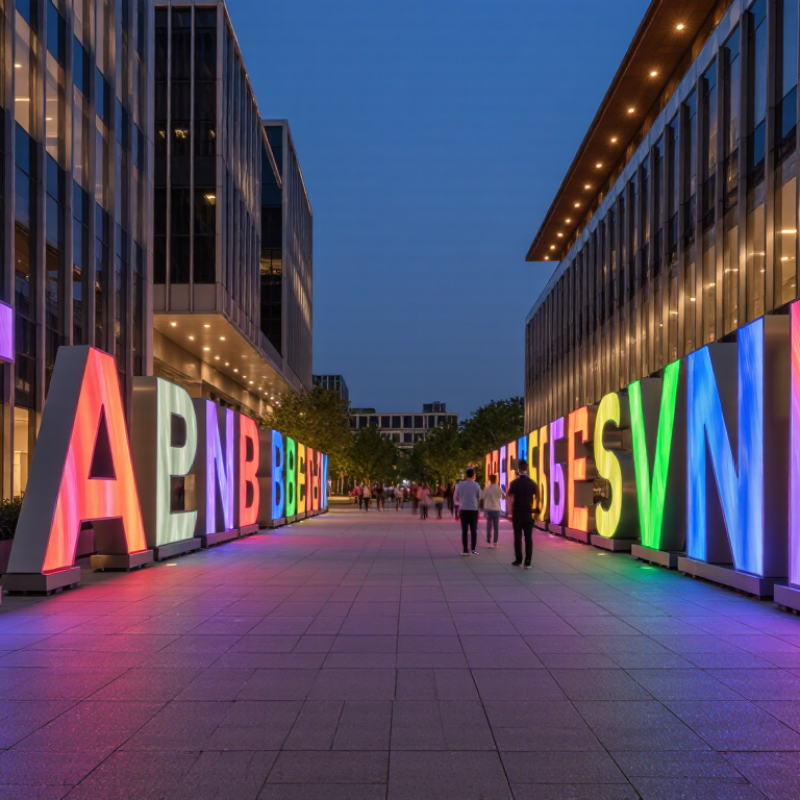
free standing giant led letters have moved beyond simple event decoration. They now shape entrances, shopping streets, exhibitions, hotels, campuses, and public celebrations. Their oversized forms create immediate visibility, while programmable LEDs add color, motion, and nighttime impact. A visitor may notice glowing initials from across a plaza before reading the building’s name.
Market evidence supports this shift. Grand View Research valued the global digital signage market at approximately USD 27.3 billion in 2023. Its forecast expects continued growth through 2030, supported by LED innovation and expanding commercial applications. MarketsandMarkets also identifies retail, hospitality, transportation, and entertainment as important demand sectors. However, these reports usually group products broadly. They rarely separate free standing giant LED letters from general digital signage. That limitation matters.
As digital-signage expert Alan Brawn has emphasized, “Digital signage is not television on a wall.” The same principle applies here. Giant letters need readable content, controlled brightness, stable structures, safe cabling, and reliable weather protection. A beautiful installation can still fail when letters flicker, shadows reduce legibility, or visitors cannot approach safely.
This guide examines China’s top 10 manufacturers through practical criteria. These include customization ability, LED quality, aluminum or steel construction, waterproof design, control systems, factory experience, testing procedures, and export support. Product claims require careful checking. Certifications alone do not guarantee performance. Site conditions also change the result.
The strongest supplier is not always the largest. Sometimes, a responsive engineering team delivers the better project.
What Are Freestanding Giant LED Letters?
Freestanding giant LED letters are large illuminated characters designed to stand independently on floors, platforms, or outdoor surfaces. Unlike wall-mounted signage, they use internal frames, weighted bases, and concealed wiring for stability. Their height often ranges from one to several meters, depending on the venue and viewing distance.
Each letter usually contains LED modules, a metal or aluminum structure, a face panel, and a power system. The face may use acrylic, translucent fabric, or polycarbonate. These materials spread light evenly across the character. Good manufacturers check brightness, heat control, cable protection, and structural balance during production. Outdoor models also require suitable sealing against rain and dust.
They are common at exhibitions, shopping centers, festivals, hotel entrances, and public events. A detailed site measurement matters. Door widths, floor strength, wind exposure, and power access can change the design. I have seen attractive letters become difficult to install because their bases were underestimated. That detail is easy to miss. Comparing China’s top ten manufacturers should therefore involve sample testing, material records, lighting uniformity, and clear safety documentation, not only photographs.
Key Features of Giant LED Letter Displays
Key Features of Giant LED Letter Displays
Free-standing giant LED letters combine signage, lighting, and three-dimensional form. Their strongest feature is visibility from a distance. Grand View Research estimated the global digital signage market at USD 27.34 billion in 2022, with an 8.1% CAGR projected through 2030. This growth reflects demand for brighter, flexible displays in retail, events, and public spaces.
Pixel pitch determines image clarity. Smaller pitches suit close viewing, while wider pitches reduce cost for outdoor installations. A 10-metre viewing distance may support a 6–10 mm pitch, depending on content. Brightness also matters. Outdoor letters commonly require 5,000 nits or more under direct sunlight. That figure can fall sharply when protective covers become dusty. IP65-rated cabinets improve resistance to rain and particles, but drainage and cable sealing still need regular inspection.
Look beyond brightness.
A high refresh rate, often 3,840 Hz or above, helps reduce flicker in camera footage. Lightweight aluminum frames can simplify transport, while weighted bases and concealed anchoring improve stability. Energy use deserves equal attention. The International Energy Agency reported that lighting accounted for about 15% of global electricity consumption in 2022, so efficient LEDs and scheduled dimming are practical choices. Manufacturers should also provide modular replacement access, thermal monitoring, and clear maintenance records. Some displays appear impressive on opening day, yet poor ventilation can shorten module life. That is an easy detail to underestimate.
China’s Top 10 Freestanding Giant LED Letter Manufacturers
China’s Top 10 Freestanding Giant LED Letter Manufacturers reflect a growing demand for visible, shareable signage in retail, hospitality, exhibitions, and public venues. Grand View Research estimated the global LED display market at about USD 7.3 billion in 2023, with an expected CAGR of approximately 8.5% from 2024 to 2030. Freestanding LED letters remain a specialized segment, but their flexible shapes and programmable lighting support memorable customer experiences.
A practical Top 10 evaluation should examine more than factory size. Manufacturing experience, pixel consistency, aluminum or steel frame quality, waterproofing, controller stability, and installation guidance all matter. According to MarketsandMarkets, the digital signage market could grow from roughly USD 27 billion in 2023 to over USD 45 billion by 2028. This trend increases demand for efficient, durable, and remotely manageable letter displays. Ask manufacturers for aging-test records, protection ratings, electrical documentation, and sample videos filmed in real operating conditions.
Details reveal quality. Letters should stand steadily on uneven floors, hide cable routes, and maintain even brightness across corners. Energy consumption also deserves attention; attractive lighting can become expensive when used every evening. Certification documents are useful, but they are not proof of perfect workmanship. Some suppliers communicate well before payment, then respond slowly during revisions. That risk is easy to overlook. A transparent quotation, inspection plan, spare-parts policy, and clear warranty terms provide stronger evidence of reliability than impressive factory photographs.