
Learn more about how Trevisan’s Horizontal Machining Centers can help you minimize set up time and labor costs.

How to Choose an Aerosol Production Line?

Choosing an Aerosol Production Line requires more than comparing machine prices. The line must match the product, container material, filling method, factory space, and expected output. A shampoo aerosol needs different controls from a household cleaner. The details matter.

Industry data shows why this decision deserves careful planning. The European Aerosol Federation reported more than five billion aerosol units filled in Europe during recent reporting years. AEROBAL’s International Aluminium Aerosol Can Study also confirms strong global demand for lightweight, recyclable aluminium packaging. These figures are useful, but definitions differ between reports. Some count filled units, while others measure cans produced. That difference can distort investment calculations.

“Safety, quality, and sustainability must remain central to aerosol packaging development,” says Gregor Spengler, Secretary General of AEROBAL. His statement reflects the practical challenge facing equipment buyers. A high-speed line may look impressive, yet poor valve placement, inconsistent crimping, or weak leak detection can create costly losses. Operators should inspect these points beside the conveyor, not only in a supplier’s presentation.

A reliable evaluation should examine dosing accuracy, pressure testing, propellant handling, automation, cleaning access, and future expansion. It should also consider trained operators and maintenance response times. A line that runs quickly but stops frequently is not truly efficient. I have seen production plans fail because they measured hourly speed, but ignored changeover time. That is an uncomfortable lesson.

This guide explains how to compare an Aerosol Production Line through technical evidence, supplier experience, compliance documentation, and realistic operating costs.
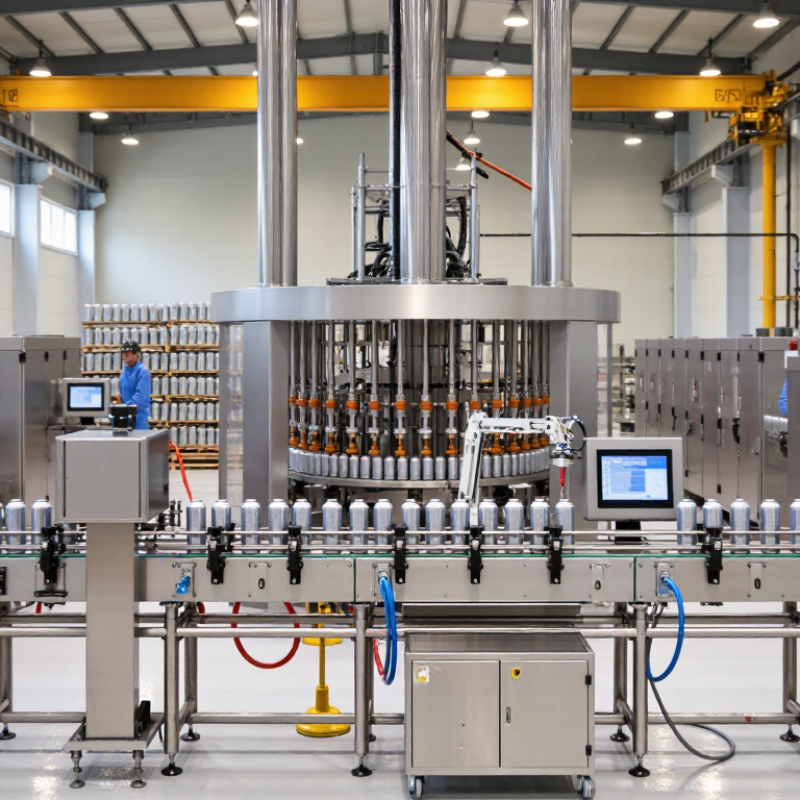
How to Choose an Aerosol Production Line?

Define Product Scope Under ISO 22702 and UN Aerosol Safety Requirements

How to Choose an Aerosol Production Line?

Define the product scope before comparing machines. ISO 22702 can guide the evaluation of general-use aerosol products. The UN aerosol requirements also affect transport classification, packaging, and testing. Confirm whether the product uses a liquefied or compressed propellant. Check its pressure, flammability, container material, valve type, and expected fill weight. These details determine the correct filling, crimping, leak-testing, and coding equipment. An experienced engineer should review the current standards and local requirements before equipment selection.

Tips: Prepare a product data sheet first. Include pressure ranges, can dimensions, valve specifications, filling tolerances, and test methods. Ask suppliers to demonstrate leak detection and weight control with your actual containers. Do not rely on catalog speed alone. Safe performance matters more.

The production line should support controlled filling, ventilation, grounding, and emergency isolation. It also needs repeatable crimping and reliable pressure checks. UN requirements may require specific testing and transport marks for the finished aerosol. Keep records for every batch, including components, settings, inspections, and rejected units. A line can appear efficient but still create costly quality problems. I would review cleaning access and operator training carefully, because these areas are often underestimated. A perfect plan on paper may still need adjustment after pilot trials.

Calculate Line Capacity from 60–300 Cans per Minute and Annual Demand

How to Choose an Aerosol Production Line?

A 60–300 cans-per-minute range can hide major planning mistakes. Start with annual demand, not the machine brochure. At 60 cans per minute, one eight-hour shift and 250 operating days produce 7.2 million cans theoretically. At 300 cans per minute, the figure reaches 36 million. These numbers assume perfect operation, which rarely exists. With 75% overall equipment effectiveness, practical output falls to 5.4 million and 27 million cans. PMMI’s 2024 State of the Industry Report highlights uptime, labor efficiency, and automation as major packaging investment concerns. Your calculation should include changeovers, maintenance, material shortages, and rejected cans.

A line’s rated speed is not always its usable speed. Filling, crimping, leak testing, coding, and packing must remain balanced. A fast filler cannot solve a slow inspection station. AEROBAL’s international aerosol can statistics show the scale and regional diversity of this market, reinforcing the need for flexible production planning. Match capacity to confirmed orders, forecast growth, and container formats. A spreadsheet may still lie.

Tips: Build three scenarios: conservative, expected, and peak demand. For example, calculate output at 60, 180, and 300 cans per minute. Then subtract realistic downtime. Ask suppliers for verified performance data using your product, container, and valve specifications. Test changeover duration on the factory floor, not only in a presentation. Leave expansion space, but avoid paying for unused capacity.

Select Can, Valve, Propellant, and Filling Systems for Product Compatibility

How to Choose an Aerosol Production Line?

Selecting an aerosol line starts with product compatibility, not machine speed. The European Aerosol Federation reported more than five billion aerosol units filled in Europe in 2022. This scale makes small compatibility errors expensive. Choose the can according to pressure, corrosion risk, and filling temperature. Steel suits many products, while aluminum may reduce weight and improve chemical resistance. Test the internal coating with the formula, especially when solvents, water, or fragrances are present. A useful test includes storage at elevated temperature and repeated actuation.

The valve must match viscosity, spray pattern, and dose accuracy. A foaming product needs different pathways from a fine mist. Check gasket resistance against the formula and propellant. Liquefied propellants can produce steady pressure, while compressed gases may change spray performance during use. The filling system should control vacuum, crimp depth, propellant mass, and leak detection. ISO 10156 offers guidance for gas flammability and oxidizing potential, while ISO 90-2 addresses aerosol container testing. Use permitted materials and propellants for each target market. Grand View Research estimated the global aerosol cans market above 11 billion dollars in 2023, but market growth does not excuse weak validation. Real production trials matter. Paper compatibility can mislead. A better line is sometimes slower.

How to Choose an Aerosol Production Line?

Typical compatibility screening for selecting the can, valve, propellant, and filling system. Ratings range from 1 (limited fit) to 5 (strong fit) and should be validated through laboratory testing and process trials.

Water-based products generally require corrosion-resistant cans and reliable crimping to prevent leakage. Hydroalcoholic and oil-based formulas require careful elastomer and gasket selection. Suspensions need efficient agitation and filling control, while foams depend heavily on valve geometry and propellant-to-concentrate ratio.

Specify ±1% Fill Accuracy, Leak Testing, Crimping, and 50°C Safety Tests

How to Choose an Aerosol Production Line?

An aerosol production line should be judged by measured performance, not polished sales language. Specify a fill accuracy of ±1% for the target formulation and container size. Ask how accuracy is calculated. Is it based on weight, volume, or a short trial? Require calibrated scales, controlled dosing pressure, and records from several production runs. A single good sample proves little. This detail matters.

Leak testing must fit the container and closure design. A practical system can check every unit without slowing the line excessively. Define the test pressure, hold time, reject limit, and response to false rejects. Crimping needs equal attention. The machine should control crimp depth and seal geometry, while operators inspect necks, valves, and damaged cans. Small defects can become visible only after handling or storage.

Request documented safety tests at 50°C, using a qualified chamber and approved test method. Observe how containers are loaded, monitored, and quarantined after testing. Temperature alarms and independent data logging add confidence. Engineers should review worst-case fill levels, materials, and pressure changes. I have seen teams focus on speed and overlook changeover verification. That mistake is easy to repeat. Build acceptance criteria into the contract, then audit them on site. Leave room for improvement; no line performs perfectly on its first shift.

How to Choose an Aerosol Production Line? — Specify ±1% Fill Accuracy, Leak Testing, Crimping, and 50°C Safety Tests
Selection Dimension Recommended Requirement Typical Procurement Target Verification Method and Practical Notes
Product Compatibility Process the intended aerosol can, valve, actuator, propellant, and formulation without material incompatibility. Stainless-steel product-contact parts; seals selected for the formulation and propellant; adjustable tooling for the specified can and valve sizes. Review material certificates, chemical-compatibility data, safety data sheets, and a documented product-trial protocol before final acceptance.
Liquid Filling Accuracy Control the mass or volume of liquid product filled into each container. Mean fill accuracy within ±1.0% of the nominal fill quantity under stable operating conditions. Use calibrated scales or gravimetric checks. Confirm accuracy across the minimum, nominal, and maximum fill quantities and at the planned production speed.
Propellant Dosing Dose liquefied or compressed propellant consistently and safely. Closed, pressure-rated dosing circuit with recipe-based quantity control and automatic shut-off for abnormal pressure or flow. Check dose repeatability, pressure stability, grounding, ventilation, emergency isolation, and compliance with applicable pressure-equipment and hazardous-area requirements.
Can and Valve Feeding Maintain correct container orientation and prevent damaged or missing components from entering the filling sequence. Presence detection for can, valve, actuator, and other required components; automatic reject for missing, inverted, or damaged parts. Run challenge tests using intentionally missing, misaligned, and incorrect components. Record detection and reject performance.
Valve Crimping Secure the valve to the can with consistent crimp diameter, crimp depth, and sealing performance. Crimp parameters controlled to the valve and can manufacturer’s specifications; typical dimensional tolerance is established during tooling validation rather than assumed universally. Measure crimp diameter and depth with calibrated gauges, inspect the curl and seal area, and perform leak testing on samples from each validated setup.
Leak Testing Detect leaks from the container body, valve cup, crimped joint, and actuator area. 100% in-line leak detection where required by the risk assessment, with automatic rejection and traceable test results. Validate the test using known good samples and calibrated leak standards. Test pressure, dwell time, sensitivity, and reject response must be documented.
50°C Safety Test Evaluate filled aerosol containers under elevated-temperature conditions relevant to aerosol safety requirements. Temperature-controlled water-bath or approved equivalent capable of maintaining 50°C uniformly throughout the test zone. Use calibrated temperature sensors and documented exposure time. Follow the applicable regulatory standard for the destination market and product classification; this test does not replace a complete safety assessment.
Fill-Weight Inspection Confirm that each production batch remains within the declared net-content limits. Checkweigher or sampling scale with resolution suitable for the declared fill quantity and automatic rejection of out-of-tolerance units. Calibrate with traceable test weights. Establish sampling frequency, control limits, tare compensation, and procedures for investigating trends.
Line Throughput Match the line speed to the required output while preserving filling, crimping, inspection, and safety-test performance. A practical pilot range of approximately 30–120 containers per minute for a compact or mid-speed line, subject to product and format validation. Confirm sustained output during a representative production run, including planned inspection, reject handling, container changes, and normal minor stops.
Changeover Capability Switch between approved can diameters, valve formats, and fill quantities with repeatable settings. Tool-less or quick-release format parts where practical, recipe storage, visual setup marks, and documented changeover instructions. Measure changeover time from the last acceptable unit of one format to the first acceptable unit of the next format, including line clearance and quality checks.
Automation and Data Control operating parameters and retain evidence of quality decisions. PLC/HMI control, password-protected recipes, alarm history, batch identification, reject counting, and exportable production records. Test user permissions, recipe version control, data retention, alarm handling, backup procedures, and electronic-record requirements applicable to the site.
Safety and Utilities Protect operators from flammable propellants, stored pressure, moving machinery, and abnormal operating conditions. Guarding, emergency stops, pressure relief, ventilation, grounding and bonding, interlocks, and appropriately rated electrical equipment for the classified area. Complete a site-specific risk assessment covering hazardous-area classification, ventilation capacity, compressed air, electrical supply, fire protection, and emergency procedures.
Quality Documentation Provide objective evidence that the line meets the agreed performance requirements. Factory and site acceptance tests covering ±1% filling accuracy, crimp dimensions, leak detection, reject logic, alarms, and 50°C test equipment performance. Require calibration certificates, material documentation, operating manuals, maintenance schedules, spare-parts lists, validation reports, and operator training records.

Compare Automation, ATEX Protection, Maintenance, and Total Operating Cost

Choosing an aerosol production line requires more than checking hourly output. In practical plant evaluations, automation is valuable when it reduces handling, improves filling consistency, and records process data. Yet highly automated equipment can increase changeover time and require specialized technicians. Ask how many minutes each format change takes. A line that looks faster may lose capacity during frequent product changes.

ATEX protection deserves careful engineering, not a checkbox. A qualified risk assessment should cover filling, propellant handling, electrical cabinets, ventilation, and static electricity. Grounding, bonding, gas detection, and suitable protective equipment must match the classified areas. Use certified components and request clear compliance documentation. Do not treat basic ventilation as complete protection. Small gaps in zoning or maintenance procedures can create serious operational risks.

Maintenance often determines the real cost of production. Inspect access points, lubrication needs, sensor locations, and cleaning time before purchase. Choose equipment with replaceable wear parts and locally available technical support. Track compressed air, electricity, rejected units, and planned downtime during trials. Total operating cost also includes training, spare parts, calibration, safety inspections, and software updates. A lower purchase price can become expensive after repeated stoppages. I have seen production forecasts fail because maintenance hours were estimated too optimistically. Real data can challenge attractive assumptions.

Scroll to Top
Scroll to Top