
What Is the Best Traffic Control Bollard?
Choosing the best Traffic Control Bollard is not as simple as selecting the strongest-looking model. A bollard beside a school entrance faces different demands from one used near a warehouse loading bay. Vehicle speed, impact risk, visibility, installation surface, and daily maintenance all matter. A practical choice should guide drivers clearly while protecting pedestrians, buildings, and restricted areas. It should also remain visible during rain, darkness, dust, and crowded traffic conditions. Small details matter. Reflective bands, rounded edges, secure anchors, and contrasting colors can influence driver response within seconds.
Reliable selection begins with evidence, not attractive product photos. Compare material strength, impact performance, mounting methods, drainage needs, and manufacturer testing information. Check whether the design suits asphalt, concrete, temporary work zones, or permanent streetscapes. Local authorities and qualified traffic engineers may also provide essential requirements. Field experience shows that installation quality often decides whether a bollard performs properly. Even a durable steel unit can loosen when the foundation is poorly prepared. That is easy to overlook.
There is no universal winner. A flexible polymer bollard may reduce repair costs in low-speed areas, while a fixed steel model may offer stronger protection near vulnerable structures. Retractable or removable options can support controlled access, but they require careful maintenance and user training. Buyers should consider visibility, replacement parts, cleaning, and long-term operating costs. The “best” option is the one matched to a verified risk assessment. Still, every assessment has limits. Traffic patterns change, and assumptions should be reviewed regularly. Careful observation, credible specifications, and professional installation create a safer and more dependable result.
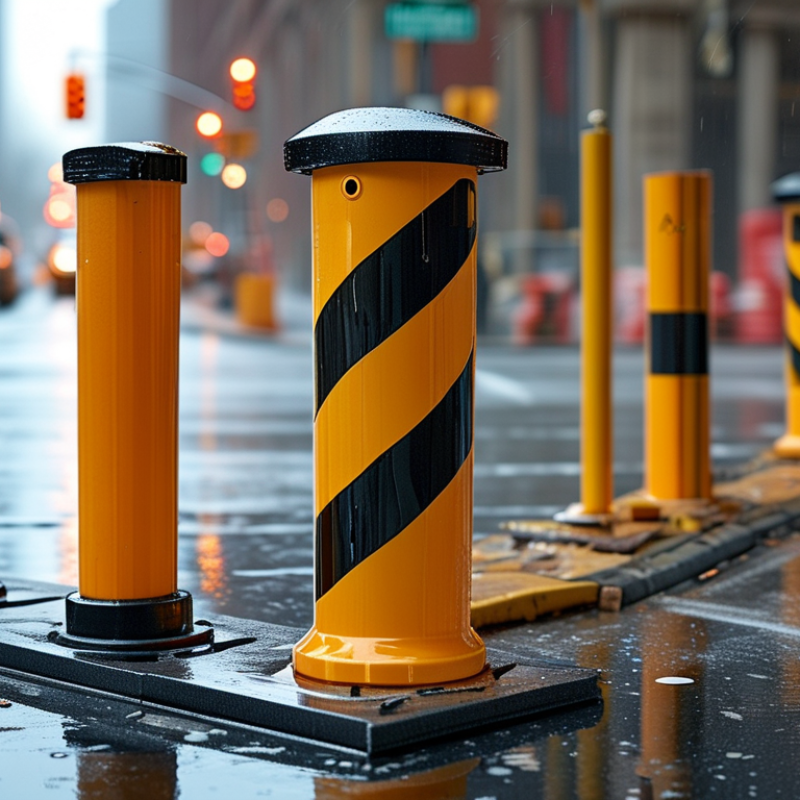
Table of Contents [Hide]
What Traffic Control Bollards Are and How They Work
What Is the Best Traffic Control Bollard?
What Traffic Control Bollards Are and How They Work
Traffic control bollards are short, vertical posts that manage vehicle movement around people, buildings, and restricted lanes. They mark boundaries without forming a continuous wall. Fixed bollards stay anchored in concrete or a structural base. Removable models use sockets, allowing temporary access when needed. Flexible versions bend or rebound after light contact, reducing damage during minor driving errors.
Their job is simple. Their placement is not.
A practical assessment should examine vehicle paths, pedestrian movement, sightlines, and emergency access. Bollards with reflective bands are easier to notice at night or during rain. Strong contrast also helps drivers identify the edge of a loading area. Spacing matters because wide gaps may invite vehicles through, while narrow gaps can obstruct wheelchairs, carts, or maintenance equipment. The best arrangement controls traffic without creating a new hazard.
Material and installation determine performance. Steel offers substantial resistance, while flexible polymers suit locations with frequent low-speed contact. Anchors must match the pavement, soil, and expected impact level. A weak base can make a strong post ineffective. This is often overlooked. Weather exposure also matters, especially where water may collect around the footing. Local requirements for accessibility, visibility, fire access, and pedestrian safety should be verified before installation. A visually neat layout may still fail in daily use, so observing real traffic patterns after installation can reveal problems that drawings miss.
What Is the Best Traffic Control Bollard? - What Traffic Control Bollards Are and How They Work
| Bollard Type | Primary Function | Typical Height | Common Materials | Impact Behavior | Installation Method | Best-Suited Locations | Visibility Features | Maintenance Needs |
|---|---|---|---|---|---|---|---|---|
| Fixed Steel Bollard | Permanent vehicle separation and access control | 750–1,200 mm | Galvanized or stainless steel | High resistance when correctly anchored; performance depends on design and foundation | Core-drilled or surface-mounted with concrete anchors | Building fronts, loading areas, pedestrian zones, and protected entrances | Reflective bands, contrasting finishes, or integrated lighting | Low; inspect anchors, corrosion protection, and visible damage |
| Removable Bollard | Temporary or scheduled vehicle restriction | 750–1,000 mm | Steel, stainless steel, or aluminum | Varies from decorative control to heavy-duty protection | Sleeve or receiver set into the pavement; bollard can be lifted out | Service access points, event areas, private roads, and emergency routes | Reflective tape, high-contrast paint, or reflective panels | Moderate; clean the receiver and check locking hardware |
| Retractable Bollard | Flexible access control without removing the unit | 600–900 mm above ground when raised | Steel or stainless steel | Usually intended for controlled access; impact rating differs by model | In-ground sleeve with manual, gas-assisted, or mechanical operation | Driveways, parking entrances, pedestrian streets, and restricted lanes | Reflective bands and high-visibility top sections | Moderate; remove debris and check drainage and moving parts |
| Flexible Polyurethane Bollard | Lane guidance and visual channelization | 450–1,000 mm | Polyurethane or other resilient polymer | Bends or deflects during low-speed contact and usually returns upright | Bolted base or surface-mounted plate | Parking lots, work zones, traffic islands, and lane separators | Bright colors and wide reflective collars | Low; replace units that are split, heavily abraded, or no longer rebound |
| Telescopic Bollard | Compact, manually controlled vehicle restriction | 600–900 mm when extended | Steel or stainless steel | Provides physical resistance; actual protection depends on construction and anchoring | Sleeve installed below or flush with the pavement | Residential drives, commercial entrances, and areas with limited space | Reflective strips or contrasting powder coating | Moderate; lubricate or service the locking mechanism as specified |
| Automatic Rising Bollard | Controlled vehicle access with remote or automated operation | 500–900 mm when raised | Steel or stainless steel with powered drive components | Security performance ranges from traffic management to certified impact resistance | Engineered in-ground foundation with power, controls, and drainage | High-security entrances, restricted streets, civic sites, and managed car parks | Reflective bands, warning lights, audible alerts, or illuminated collars | High; requires scheduled inspection of controls, drainage, seals, and power systems |
Selection Guide: The best traffic control bollard depends on the required level of vehicle resistance, access frequency, installation conditions, visibility requirements, available maintenance resources, and applicable local regulations. Flexible bollards are generally suitable for guidance and low-speed contact, while fixed or certified security bollards are more appropriate where vehicle impact protection is required.
Note: Dimensions and performance ranges are typical industry values. Actual impact resistance, spacing, foundation requirements, and compliance depend on the specific design, site conditions, and relevant local or national standards.