Cold Rolled Coil Best Applications and Benefits Explained?
Cold Rolled Coil is a crucial material in various industries, known for its versatility and strength. According to a recent industry report by Grand View Research, the global cold rolled steel market is projected to reach USD 537 billion by 2025, highlighting its growing importance. This material is produced by rolling steel at room temperature, resulting in a smoother surface finish and tighter tolerances compared to hot rolled alternatives.
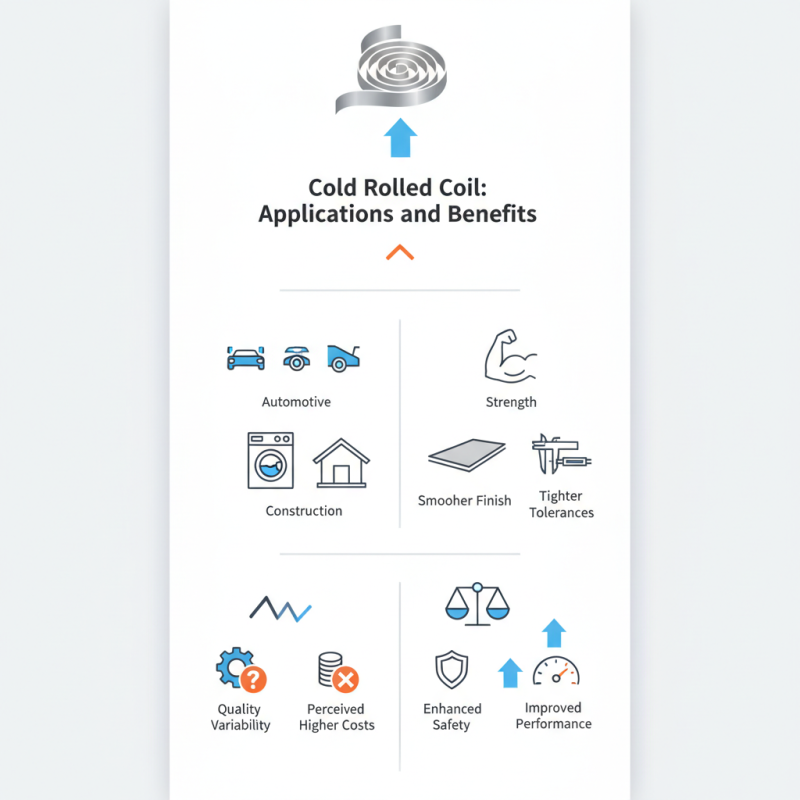
Applications of Cold Rolled Coil span across automotive, appliances, and construction. The automotive industry accounts for around 30% of cold rolled steel usage. Automakers favor it due to its excellent formability and strength, which are essential for enhancing vehicle safety and performance. In construction, it plays a vital role in producing components like roofing and wall panels, showcasing its adaptability.
Despite its benefits, challenges remain. For instance, the manufacturing process can create variability in quality. Additionally, some industries may overlook the benefits of Cold Rolled Coil due to perceived higher costs. Careful consideration is necessary to balance these factors for optimal application.
Understanding Cold Rolled Coil: Definition and Process
Cold rolled coil (CRC) is a type of steel that undergoes a specific manufacturing process. This begins with hot rolled steel that’s cooled at room temperature. The cold rolling process then compresses the steel, enhancing its surface finish and structural precision. According to industry reports, CRC offers better yield strength, which contributes to its rising popularity across various sectors.
The manufacturing of cold rolled coil creates smooth surfaces and tighter tolerances. This is essential in industries like automotive and appliance manufacturing. A recent analysis found that the global market for cold rolled steel is expected to grow significantly, increasing by approximately 5% annually through 2025. Such growth reflects the material’s versatility and adaptability in meeting specific design requirements.
Despite its advantages, the cold rolling process has some challenges. It often requires additional processes like annealing and coating to achieve desired properties. These steps may increase production costs and time. Unsurprisingly, manufacturers must weigh benefits against potential downsides. Balancing these factors remains crucial for improving production efficiency and product quality in the cold rolled steel market.
Cold Rolled Coil Best Applications and Benefits
| Application | Benefits | Typical Industries | Thickness Range (mm) |
| Automotive Parts | High Strength, Surface Finishing | Automotive | 0.3 - 3.0 |
| Home Appliances | Good Formability, Surface Quality | Electronics, Kitchenware | 0.4 - 6.0 |
| Construction Materials | Enhanced Durability, Cost-Effective | Construction, Infrastructure | 0.5 - 4.0 |
| Furniture | Aesthetic Appeal, Custom Shapes | Furniture Manufacturing | 0.3 - 5.0 |
| Packaging | Lightweight, Flexible | Food & Beverage, Chemicals | 0.2 - 2.0 |
Key Applications of Cold Rolled Coil in Various Industries
Cold rolled coil (CRC) is widely used in various industries. Its smooth surface and precise dimensions make it ideal for many applications. In the automotive sector, for example, CRC is essential for producing car panels and structural components. Manufacturers favor it for its excellent mechanical properties and flexibility.
In construction, cold rolled coil serves multiple purposes. It is used in beams, brackets, and frames due to its strength and durability. The lightweight nature of CRC helps reduce the overall load on structures. It can also be easily shaped into intricate designs. However, there are drawbacks. If not properly treated, CRC can be susceptible to corrosion, requiring additional maintenance.
The home appliance industry also benefits from cold rolled coils. They are used in refrigerators, washing machines, and other appliances. The smooth finish enhances aesthetic appeal, and the material’s strength supports functionality. Yet, competition is fierce, making it hard for new manufacturers to penetrate this market. Companies must continually innovate to meet demands while addressing the challenges of cost and quality.
Advantages of Using Cold Rolled Coil Over Other Materials
Cold rolled coil is highly valued in various industries due to its unique properties. One major advantage is its superior surface finish. This material often has a smoother texture compared to hot rolled options. This can lead to better paint adhesion in applications like automotive parts. It also offers a clean and aesthetic look for consumer goods.
Another benefit of cold rolled coil is its increased strength. Manufacturers often find it easier to work with because of its exceptional uniformity. This can translate to tighter tolerances during production. However, some may find that its brittleness requires careful handling. Moreover, while cold rolled coil can be more expensive initially, the long-term durability can offset those costs.
Cold rolled coil is also versatile. It can be used in construction, appliances, and electronics. Yet, the processing can be complex, and errors may lead to waste. Therefore, understanding its characteristics is essential for optimal usage. This material is not without its challenges, but the benefits often outweigh the drawbacks.
Factors Influencing the Choice of Cold Rolled Coil in Manufacturing
When choosing a cold rolled coil for manufacturing, several factors come into play. The thickness of the material is crucial. Thinner coils are lightweight and flexible. They are ideal for applications needing precision and finesse. Conversely, thicker coils provide strength and durability.
The material composition also affects performance. Cold rolled coils are typically made from steel or other alloys. The choice of alloy influences corrosion resistance and machining capabilities. Manufacturers must consider the environment where the product will be used.
Tips: Always evaluate the end application of your product. This can guide the selection process effectively. Also, remember that the finishing options available for cold rolled coils can enhance their usability in diverse applications. Pay attention to surface quality—it can make a difference in aesthetic and functional aspects. Adapting to specific needs involves continuous learning and adjustments.
Future Trends and Innovations in Cold Rolled Coil Technology
Cold rolled coil technology is evolving rapidly. Innovations focus on improving the material properties and expanding applications. One exciting trend is the enhancement of surface finishes. Advanced coatings can provide better corrosion resistance. These coatings also improve aesthetics, which is crucial for consumer products.
Another significant trend is the push for sustainability. Manufacturers are exploring ways to reduce energy consumption in the cold rolling process. Technologies that recycle water and materials are becoming essential. Furthermore, companies are looking into automation. Smart factories can optimize production schedules and reduce waste.
However, challenges remain. Balancing quality with cost efficiency is not easy. Innovations must not compromise the integrity of the coil. Companies need to assess new technologies carefully. Keeping up with market demands while ensuring reliable products is complex. There is room for growth in these areas, and continued research is vital.
Cold Rolled Coil Applications and Benefits
This chart illustrates the distribution of cold rolled coil applications across various industries, highlighting their significant use in automotive, construction, and electronics.