How to Choose the Best CNC Boring Machine?
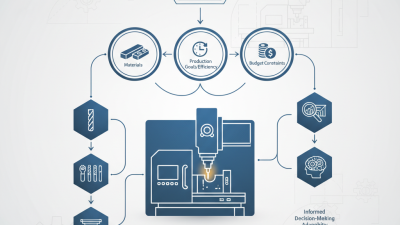
Choosing the best cnc boring machine requires more than comparing price tags and spindle speeds. The right choice depends on your workpieces, tolerances, production volume, and available floor space. A machine that performs well in a large automotive plant may be unsuitable for a small fabrication workshop.
Start with the boring diameter, maximum workpiece weight, table dimensions, and spindle travel. Measure your largest component in advance. A heavy cast housing can expose weak table support very quickly. Check spindle power, torque, speed range, and tool compatibility. These details affect cutting stability, surface finish, and tool life. Do not overlook control-system usability. Operators often work faster when menus are clear and setup screens are logical.
Look closely at accuracy claims. Ask how manufacturers test positioning accuracy and repeatability. Request inspection records, sample-cut results, and references from comparable users. Experienced machinists can reveal practical issues, such as vibration at low speeds or difficult chip removal. Service response also matters. A reliable supplier should explain installation, calibration, training, and spare-part availability.
There is no universal winner.
A careful decision should balance present requirements with realistic future work. Buying excessive capacity can waste capital and floor space. Choosing too little capacity can create constant rework and awkward setups. I would also leave room for uncertainty. Production forecasts change, and catalog figures may not reflect your actual material or tooling. Test the cnc boring machine with representative parts whenever possible. That small trial may prevent a very expensive mistake.
Define Your CNC Boring Requirements and Machining Goals
Choosing the best CNC boring machine starts with defining the work, not comparing catalogs. Identify hole diameters, boring depths, materials, and required tolerances. Record the largest component, its weight, and available floor space. A cast-iron housing needs different cutting stability than an aluminum plate. Measure real parts. Do not rely only on drawings. Production volume matters too. A machine for occasional repair work may not suit continuous batch production. Set measurable goals, such as reducing setup time, maintaining tolerance, or improving surface finish.
These targets help evaluate spindle power, table capacity, axis travel, and control functions. Include current cycle times, tool sizes, fixture dimensions, coolant needs, and inspection methods. Ask for test cuts with your material and tooling. Review boring-bar deflection, chip control, and thermal drift at the intended depth. Small details matter. A machine may meet its listed travel yet struggle when a long bar reaches a deep bore. Leave room for uncertainty. Material batches vary, operators need training, and maintenance can interrupt schedules. I once underestimated fixture access; the machine had enough travel, but loading became awkward.
Tips:
Create a requirement sheet before contacting suppliers. Check whether the machine can support your heaviest fixture safely. Compare achievable tolerances with your inspection equipment. Request documented test results, maintenance intervals, and operator training details. Keep one requirement flexible, if possible. Over-specification can raise costs without improving the actual part.
Compare CNC Boring Machine Types and Structural Features
How to Choose the Best CNC Boring Machine?
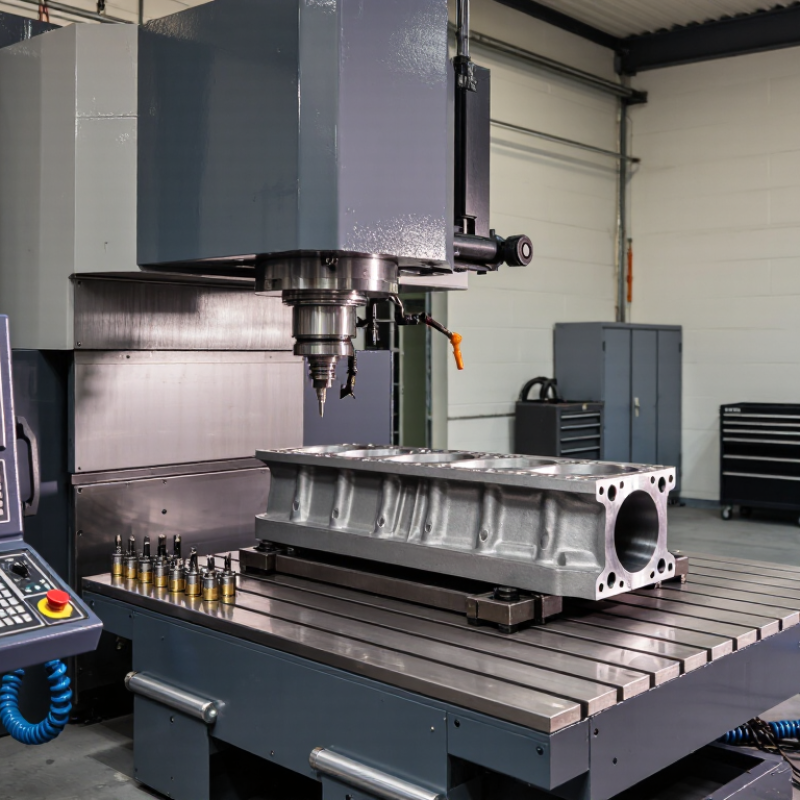
CNC boring machines differ mainly in orientation, workholding, and structural support. Horizontal boring mills suit long housings, engine blocks, and large components. Their spindle travels horizontally, while the workpiece rests on a heavy table. This layout improves access to several sides. It can also simplify chip removal.
Vertical boring machines hold large, round parts on a rotary table. The cutting head moves above the workpiece, making them practical for flanges, rings, and valve bodies. Their structure usually has a rigid column, crossrail, and adjustable ram. Large diameters become easier to control.
Floor-type boring machines offer flexible movement for oversized parts. They often use a fixed floor plate, traveling column, and movable spindle head.
Structure matters more than appearance.
Check the spindle diameter, ram extension, guideway design, and table load rating. A long ram may reach deep cavities, but excessive extension can reduce rigidity. Thermal stability also affects boring accuracy during extended cycles. Cast iron beds can absorb vibration well, while reinforced linear systems may provide faster positioning.
In practical shop evaluations, I would inspect test cuts rather than trust specifications alone. Measure bore roundness, surface finish, and repeatability after several hours. Ask how the machine handles interrupted cuts. A perfectly rigid design is rarely affordable. The best choice balances part size, tolerance, tooling access, maintenance skill, and future production needs. Small errors in this comparison can become expensive later.
Evaluate Accuracy, Capacity, Spindle Performance, and Control Systems
Choosing a CNC boring machine starts with measurable accuracy, not brochure promises. Check positioning and repeatability through ISO 230-2 testing. A 0.01 mm display resolution does not guarantee 0.01 mm machining accuracy. Thermal drift, tool deflection, and foundation vibration can change the result. Measure a test bore after several hours, not after a cold start.
Capacity must match real workpieces. Record maximum diameter, boring depth, table load, and tool projection. Leave working clearance around fixtures. A machine that barely accepts the part may create constant setup problems. Spindle performance also deserves practical testing. Compare rated power, torque curves, speed range, and runout at the tool nose. High speed helps aluminum, while stable low-speed torque matters for deep steel boring. I would question any specification without a cutting test.
Control systems affect both productivity and reliability. Deloitte’s 2024 Smart Manufacturing and Operations Survey found that 86% of manufacturers view smart manufacturing as important to competitiveness. That supports investing in data-ready controls, but connectivity alone is not intelligence. Check program recovery, probing integration, alarm history, remote diagnostics, and operator access levels. The International Federation of Robotics reported 541,302 industrial robots installed globally in 2023, showing how quickly automated cells are expanding. Still, integration can become fragile. Ask whether the boring machine shares usable data with inspection and material-handling systems. Then test it with your operators, using real tools, real tolerances, and an imperfect production schedule.
Calculate Total Cost and Select the Best Machine for Your Shop
Choosing the best CNC boring machine starts with total cost, not the purchase price. Build a five-year estimate before comparing specifications. Include machine price, freight, foundation work, electrical installation, tooling, coolant, software, training, maintenance, and financing. Add expected downtime and operator wages.
Cash is obvious. Downtime is not.
The U.S. Department of Energy reports that motor-driven systems can consume about 70% of industrial electricity. Estimate spindle, pump, and chip-conveyor energy during real production hours. A machine drawing 18 kW for 2,000 hours annually uses 36,000 kWh before standby consumption. Multiply that figure by your local electricity rate. Also check compressed-air leaks and coolant-pump settings. Small losses become expensive over five years.
Production capacity must support the calculation. Record boring diameter, workpiece weight, tolerance, material, setup time, tool life, and monthly spindle hours. A faster tool changer may save twelve minutes per job, but it has little value when jobs run once weekly. The 2024 Deloitte Smart Manufacturing and Operations Survey found that 86% of manufacturing leaders viewed smart manufacturing as important to competitiveness. That supports investment in monitoring, probing, and data collection, but only when your shop can use the data. My first estimates are often too optimistic. I sometimes underprice training and fixture changes. Leave a contingency of 10–15%, then compare cost per productive hour, service response, accuracy retention, and resale risk—not just horsepower or table size.
How to Choose the Best CNC Boring Machine?
Compare the estimated five-year ownership cost before selecting a machine. The model includes purchase, installation, tooling, energy, and maintenance costs in USD.
Planning insight: A higher-capacity machine requires more upfront investment, but it may be justified when larger workpieces, tighter tolerances, or higher production volume increase revenue and reduce outsourcing.