How to Choose the Best Coiling and Packing Machine?
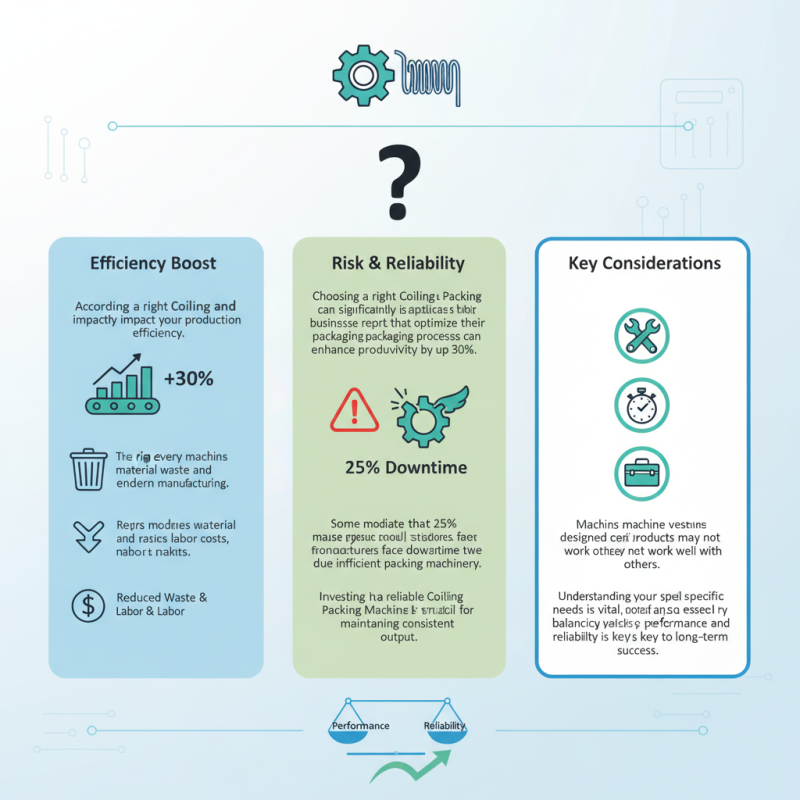
Choosing the right Coiling and Packing Machine can significantly impact your production efficiency. According to a recent industry report, businesses that optimize their packaging processes can enhance productivity by up to 30%. The right machine minimizes material waste and reduces labor costs, making it essential for modern manufacturing.
However, not every machine meets quality standards. Some models may cause operational issues over time. Reports indicate that 25% of manufacturers face downtime due to inefficient packing machinery. Investing in a reliable Coiling and Packing Machine is crucial for maintaining consistent output.
Understanding your specific needs is vital. Machines designed for certain products may not work well with others. Consider machine versatility, speed, and ease of maintenance. As the industry evolves, balancing performance and reliability is key to long-term success.
Factors to Consider When Selecting Coiling Machines in Packaging
When selecting coiling machines for packaging, certain critical factors must be evaluated. The efficiency of a coiling machine is crucial. According to industry reports, machines with high throughputs can increase production rates by up to 30%. Evaluating speed and capacity allows for better alignment with production needs. Consider the types of materials the machine handles. Some machines excel with specific materials, while others may struggle, leading to costly errors.
Maintenance is another important aspect. A machine with a complex design might require frequent servicing, leading to downtime. In contrast, simpler machines may offer easier access for maintenance. Trends indicate that over 60% of manufacturers prefer machines that minimize service interruptions. This reflects the industry's need for reliability.
Additionally, automation features are becoming increasingly significant. Automated machines can enhance precision and reduce labor costs. However, a fully automated system could lead to a reliance on technology, which might become problematic if issues arise. Balancing automation with manual control is key when assessing potential machines. In this evolving landscape, ongoing reflection on these factors is necessary to ensure the right choice is made.
Assessing the Speed and Efficiency of Coiling and Packing Equipment
When selecting coiling and packing machines, speed and efficiency play crucial roles. Research indicates that an efficient machine can improve production rates by up to 25%. This efficiency directly impacts overall operational costs, making it essential to evaluate each machine’s performance metrics.
Consider the automation level. Fully automated machines often run at speeds exceeding 1000 units per hour. However, complexity in setup can lead to downtime. This downtime often decreases overall productivity. A balance between speed and simplicity can be challenging.
It's important to assess energy consumption as well. Recent studies suggest that advanced machines are up to 30% more energy-efficient. But, many machines overlook this aspect, leading to high operating costs. Identifying machines that offer both speed and sustainability is vital. Look for comprehensive performance reports to make informed decisions.
How to Choose the Best Coiling and Packing Machine? - Assessing the Speed and Efficiency of Coiling and Packing Equipment
| Machine Type | Coiling Speed (m/min) | Packing Speed (units/hour) | Efficiency Rating (%) | Power Consumption (kW) |
| Automatic Coiler | 150 | 1200 | 90 | 5 |
| Semi-Automatic Coiler | 100 | 800 | 85 | 4 |
| Manual Coiler | 50 | 400 | 75 | 3 |
| Fully Automated Packing Machine | N/A | 1500 | 95 | 6 |
| Automatic Wrapping Machine | N/A | 1100 | 88 | 4.5 |
Understanding Material Compatibility for Coiling and Packing Machines
Choosing the right coiling and packing machine requires careful consideration of material compatibility. Each machine type is designed to handle specific materials, which directly affects efficiency and product quality. For instance, plastic films often need different settings compared to paper or metal foils. If mismatched, it could lead to contamination or bottlenecks in production.
Many users overlook the impact of material properties. Thickness, elasticity, and moisture levels play a vital role. A machine that coils effectively for one type of film might not work well for another. Some films might stick together or tear under the wrong conditions. This can produce waste and delay production times.
Also, regular testing and adjustments are crucial. Users should monitor how their materials interact with the machinery. Sometimes, minor tweaks can make a significant difference. However, many operators don’t revisit their initial choices. They assume their first selection was perfect. Yet, without ongoing evaluation, issues may arise quietly. It’s a critical step that shouldn't be ignored.
Evaluating the Cost-Effectiveness of Coiling and Packing Solutions
When choosing a coiling and packing machine, cost-effectiveness is crucial. It's not just about the initial price. Maintenance costs matter too. You’ll need to factor in spare parts and service expenses. Over time, these can add up significantly. Sometimes, a lower-priced machine requires more frequent repairs. This could lead to downtime and lost revenue.
Consider the features that affect performance. Machines that are versatile may save money in the long run. They can adapt to various products and sizes. However, if the machine is too complex, it can lead to increased training costs. Employees might struggle to learn how to operate it efficiently. Evaluate the balance between advanced features and ease of use.
Look into the warranty and support options. A machine with a shorter warranty may not be the best choice. It suggests that the manufacturer lacks confidence in its product. Also, inadequate customer support can be frustrating. You might find yourself in a bind during critical times. Overall, weighing these factors carefully can help you invest wisely.
Importance of After-Sales Service and Support in Machine Selection
Choosing the right coiling and packing machine involves various factors, but after-sales service is crucial. High-quality machines may have excellent performance, yet what happens after purchase? If issues arise, timely support is vital.
Many buyers overlook this aspect. They focus solely on price and features. But consider what an unresponsive service center means for production downtime. Waiting days or weeks for repairs can lead to costly losses. A supplier that offers reliable after-sales service can significantly mitigate this risk.
Detailed support can include training, spare parts availability, and maintenance options. Always ask about service response times and guarantees. Imagine receiving a machine with poor documentation or no one to help troubleshoot. Such situations can be frustrating and impact overall efficiency. Making a well-rounded decision should involve assessing these crucial service elements.