China Top Iron Pipe Bending Machine Manufacturer?
Choosing a China Top Iron Pipe Bending Machine Manufacturer requires more than comparing prices. The right supplier should demonstrate engineering experience, stable production, and reliable after-sales support. A machine may look impressive in a catalogue. Its real value appears on the factory floor.
Professor Matthias Merklein, a recognized forming-technology researcher, has stated, “The process, material, and tooling must be considered as one system.” This principle applies directly to every Iron Pipe Bending Machine. Pipe diameter, wall thickness, bending radius, and steel grade must match the machine’s capacity. Otherwise, wrinkles, flattening, or springback may appear around the bend.
Details matter.
A dependable Chinese manufacturer should explain its frame design, hydraulic or servo control, mandrel options, tooling accuracy, and testing procedure. Ask for sample bends using your actual pipe specifications. Examine the finished radius under bright light. Check whether the outer wall remains smooth and whether the inner wall collapses.
Factory visits can reveal more than polished brochures. Look for calibrated measuring tools, organized assembly areas, and documented inspections. Request installation guidance, spare-parts availability, operator training, and realistic delivery terms. Certifications help, but they do not replace process evidence.
Some buyers focus too heavily on the lowest quotation. That choice can become expensive when tooling wears quickly or technical support disappears. Still, no manufacturer is perfect. Even an experienced supplier may need adjustments for unusual alloys, complex radii, or changing production volumes.
This guide evaluates leading Chinese manufacturers through practical criteria, not marketing language. Performance, communication, and long-term service deserve equal attention.
What Is an Iron Pipe Bending Machine?
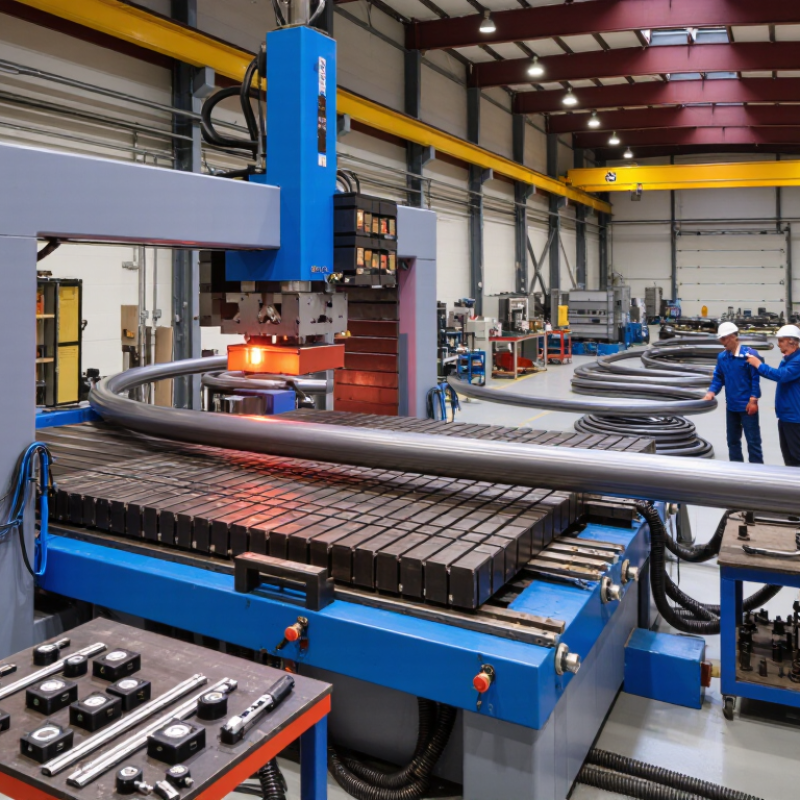
An iron pipe bending machine is industrial equipment that forms metal pipe into controlled angles and radii. It uses a die, clamp, and bending force to shape the pipe without cutting it. Depending on the model, the force may come from hydraulic pressure, electric motors, or manual operation.
The machine supports plumbing, construction, furniture, and industrial fabrication. A technician places the pipe into a matching die, secures it, and checks the required bend angle. Digital controls can improve repeatability, while a simple mechanical scale may suit low-volume work. Pipe diameter, wall thickness, material hardness, and bend radius all affect the result. A wrong die can flatten the pipe or create visible wrinkles.
Accuracy begins before the machine starts. Operators should inspect alignment, lubrication, tooling wear, and emergency controls. Production experience also shows that identical pipes may react differently after storage or welding. No setup is flawless. Small springback can remain after bending, so trial pieces and measured adjustments are valuable. I have found that speed often receives too much attention. Stable pressure and careful positioning usually protect quality better. A reliable manufacturer should explain capacity limits, provide clear operating data, and support maintenance training. That information matters more than impressive machine appearance.
An iron pipe bending machine forms pipes into precise angles and radii without cutting or welding. The chart shows typical maximum outside-diameter capacities for common bending machine categories. Actual capacity depends on pipe wall thickness, material strength, tooling, and bending method.
How Iron Pipe Bending Machines Work
China Top Iron Pipe Bending Machine Manufacturer?
How Iron Pipe Bending Machines Work
An iron pipe bending machine reshapes straight tubing through controlled force. The operator first enters pipe diameter, wall thickness, bend angle, and radius. Rollers or dies then secure the pipe. In rotary draw bending, a clamp die holds the tube while a rotating die pulls it around a fixed radius. A pressure die supports the outside wall. A mandrel may enter the tube to prevent collapse.
During bending, the outer wall stretches and becomes thinner. The inner wall compresses and may wrinkle. Springback is another problem. The tube usually opens slightly after pressure disappears. Experienced technicians compensate with a small overbend, but this is not always exact. Material grade, heat condition, lubrication, and tooling alignment can change the result. The World Steel Association reported about 1.88 billion tonnes of crude steel production in 2023, showing the broad industrial scale behind steel tube processing. ISO 1127 also defines important tube dimensions and tolerances for industrial applications.
Tips: Measure the real pipe, not only its label. Check wall thickness at several points. Use a mandrel for thin-wall tubing and inspect the first bend with a template. A perfect machine setting can still fail when the material varies. That part deserves more attention. Grand View Research identifies automation and precision control as major trends in the tube bending machine market, yet skilled inspection remains necessary. Fresh operators often trust digital readings too much. Steel can disagree.
Applications, Quality Standards, and After-Sales Service
China Top Iron Pipe Bending Machine Manufacturer?
China’s large steel base supports strong demand for pipe bending equipment. The World Steel Association reported about 1.005 billion tonnes of crude steel production in China during 2024. These machines serve construction, HVAC, shipbuilding, energy, and municipal pipeline projects. A capable manufacturer should match tooling to pipe diameter, wall thickness, material grade, and required bend radius. Small errors matter. Excessive ovality can weaken joints and complicate installation.
Quality should be verified through documented procedures, not attractive brochures. ISO 9001 supports controlled production and traceability, while ISO 12100 addresses machinery risk assessment. Electrical systems should align with IEC 60204-1 principles. For steel pipe applications, buyers can also compare material requirements with ASTM A53 or equivalent specifications. Factory acceptance testing should record bending angle accuracy, repeatability, surface condition, and emergency-stop performance. I would request sample bends before ordering. Real samples reveal more than promises.
After-sales service often separates a reliable supplier from an ordinary one. The service package should include operator training, installation guidance, digital manuals, spare-part identification, and remote troubleshooting. Response times should be written into the contract. Spare rollers and sensors should remain available for years, not weeks. A clear warranty matters. Still, no supplier is perfect. Software updates may cause delays, and local technicians may not understand every machine. Buyers should check previous export references, service records, and video evidence of completed tests before making a final decision.