Learn more about how Trevisan’s Horizontal Machining Centers can help you minimize set up time and labor costs.

7 Safety Lockout Box Buying Tips for Global Buyers?

Buying a Safety Lockout Box for global operations is not a simple catalog decision. The right choice supports consistent energy-control procedures across factories, warehouses, and maintenance teams.

A practical evaluation starts with real working conditions. Consider box capacity, padlock compatibility, visibility, corrosion resistance, and wall-mounting options. A crowded box slows response during an urgent maintenance task. A weak latch may fail in dusty or humid environments. Small details matter.

Experienced safety managers should also review supplier documentation. Ask for material specifications, product dimensions, load information, inspection records, and clear user instructions. Check whether the design suits local workplace practices and the equipment already used on site. Sample testing can reveal problems that product photos hide.

Global purchasing adds another layer. Buyers need reliable packaging, stable lead times, accurate customs information, and responsive after-sales support. A low unit price can become expensive when replacement parts arrive late. Communication quality matters, especially across languages and time zones.

No checklist is flawless. I have seen teams focus on appearance while overlooking glove access or label durability. That mistake is easy to repeat. A strong buying process combines supplier evidence, field feedback, and practical trials before a large order.

These seven buying tips will help global buyers compare products with greater confidence. They also encourage a useful question: will this Safety Lockout Box remain clear, secure, and usable after months of daily work?

7 Safety Lockout Box Buying Tips for Global Buyers?

Define the Safety Lockout Box’s Purpose and Required Capacity

A safety lockout box should match the task it supports. Is it for one machine, several energy sources, or a full maintenance area? A box for group lockout usually holds isolation keys, personal padlocks, tags, and written procedures. A smaller box may suit a single technician. Mixing these purposes creates confusion during a critical shutdown.

Capacity needs more than a padlock count. Count every authorized worker, isolation point, and required lock position. Then allow space for temporary staff and planned expansion. For example, eight workers may need eight personal locks, two supervisor locks, several tags, and multiple hasps. The box should hold these items without forcing them into a crowded pile. Crowding slows verification.

Measure the largest item, not only the smallest lock. Check hook spacing, lid clearance, mounting space, and visibility of identification labels. Weather exposure also affects the enclosure material and closure design. In practical site reviews, buyers often underestimate shared equipment. That assumption can fail. A box may have enough hooks but lack room for gloves or documents. Some facilities also need separate compartments for keys and unused locks. Define that need before comparing suppliers. Capacity figures can look precise, yet real work habits are less tidy. Leave a little honest room.

Check Material Strength, Locking Design, and Workplace Compatibility

Asafety lockout box must withstand daily handling, not just look sturdy in a catalog. In workplace inspections, I have seen thin plastic crack near hinge points after repeated use. Material strength matters most around the latch, corners, and mounting holes. Choose reinforced plastic for corrosion-prone areas, or coated metal for heavy industrial contact. Check temperature limits, moisture resistance, and resistance to common cleaning chemicals. A polished surface can still mislead.

The locking design should support real isolation procedures. Look for a lid that closes fully and stays secure under vibration. Multiple workers may need to attach personal locks, so the hasp openings must fit common lock sizes. The lockout box should also show whether the contents are secured or accessible. Small labels help, especially in dim maintenance rooms. Test it physically.

Workplace compatibility goes beyond dimensions. Measure the wall, cabinet, or mobile cart before ordering. Confirm that gloves can operate the latch without slipping. A box placed too high may be technically available but practically ignored. Consider dust, rain, oil, and limited lighting at the installation point. Global buyers should also check language-neutral markings and replacement-part availability. I once underestimated door clearance, and the box blocked a nearby switch. That mistake was preventable. A trial installation with actual workers often reveals problems that specifications miss.

Evaluate Compliance With Global Safety Standards and Regulations

Global Safety Standards Matter When Buying a Lockout Box

A safety lockout box should match the regulations at the installation site, not just a supplier’s marketing claims. Ask for documented evidence of material performance, electrical insulation, corrosion resistance, and mechanical durability. Product photos are not proof.

For United States facilities, review alignment with OSHA 29 CFR 1910.147 and related control-of-hazardous-energy requirements. European buyers may also examine ISO 14118, local workplace rules, and applicable conformity documentation. Other regions can require national standards or industry-specific approvals. The same box may not satisfy every jurisdiction.

Check whether the box supports clear identification, controlled access, and durable labeling. A supervisor should recognize the equipment number in poor lighting. Test the hasp openings with the locks your workers actually use. Some boxes look spacious until several locks and tags are attached. Small details matter.

Request test reports, technical drawings, user instructions, and traceable production information. Confirm the documents identify the exact model, revision, and test conditions.

Vague certificates deserve questions. A certificate alone may not demonstrate full legal compliance.

Review language requirements too. Warning labels and instructions should be understandable to every authorized worker. Translation quality can affect safe use. Do not assume an international shipment is automatically compliant. Regulations change, and supplier statements can become outdated. No checklist is flawless. A final review with a qualified local safety professional may reveal a gap before installation.

Compare Portability, Visibility, Customization, and Maintenance Needs

7 Safety Lockout Box Buying Tips for Global Buyers

Compare Portability, Visibility, Customization, and Maintenance Needs

Tip 1: Test portability before placing a bulk order.

A compact box should fit crowded maintenance carts without blocking tools. Check its handle, weight, mounting options, and door clearance. During site inspections, I have found that smooth handles matter when workers wear thick gloves. Wheels can help, but they may increase storage space. Measure actual transport routes, not only product dimensions. This detail is often missed.

Tip 2: Prioritize visibility and practical customization.

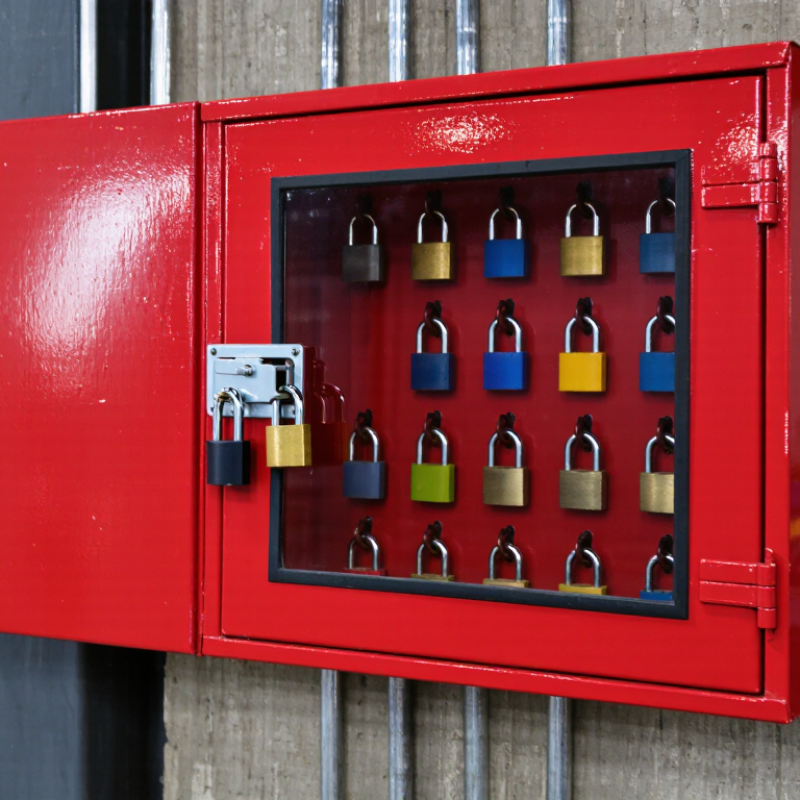
A bright enclosure, clear label area, and transparent window can reduce searching time during shift changes. However, excessive labeling may create visual confusion. Specify language, warning symbols, lock positions, and identification fields for each worksite. Leave room for local procedures and future equipment changes. A box that looks organized may still fail if users cannot read labels from two meters away.

Tip 3: Review maintenance needs before selecting materials and hardware.

Check resistance to dust, moisture, cleaning chemicals, and temperature changes at the destination site. Hinges should open smoothly, while latches must remain secure after repeated use. Ask for replacement parts, inspection guidance, and surface-cleaning instructions. In my experience, buyers sometimes focus on purchase price and overlook damaged labels or stiff hinges. That choice can weaken daily reliability. Confirm sample performance first.

Verify Supplier Reliability, Certifications, Pricing, and Delivery Support

7 Safety Lockout Box Buying Tips for Global Buyers

A reliable supplier should provide traceable factory details, inspection records, and responsive technical support. Request a recent quality certificate, audit summary, and sample lot report before placing a large order. ISO’s Survey of Management System Certifications 2023 recorded more than 1.2 million ISO 9001 certificates worldwide, but certification alone does not prove product consistency. Check whether the certificate covers the actual manufacturing site. Ask for material specifications, load testing methods, and clear photographs of hinges, labels, and locking points. Small details matter.

Compliance evidence should match the destination market and the box’s intended use. OSHA estimates that effective lockout/tagout practices could prevent about 120 fatalities and 50,000 injuries each year in the United States. This makes verification more important than attractive packaging. Compare total landed cost, not only the unit price. Include tooling, documentation, freight, customs handling, and replacement parts. A cheap quotation may become expensive after delays. Sometimes, a higher price is justified.

Delivery support needs equal attention. Confirm production capacity, lead-time assumptions, export packaging, and responsibility for damaged cartons. Request a written escalation process and a realistic shipping schedule. Supplier promises can sound precise while remaining weak in practice. A trial order may reveal labeling errors, slow replies, or inconsistent dimensions. That test costs time, but skipping it can cost much more. Keep purchase records, inspection photos, and approved samples for future checks.

7 Safety Lockout Box Buying Tips for Global Buyers: Verify Supplier Reliability, Certifications, Pricing, and Delivery Support

No. Buying Dimension What to Verify Practical Benchmark Warning Signs Recommended Buyer Action
1 Supplier Reliability Check the supplier’s registered business details, export experience, production capacity, inspection process, and references from comparable industrial buyers. A reliable supplier should provide a consistent company profile, traceable product documentation, responsive communication, and a clear complaint-handling process. Unverifiable address, changing product specifications, copied certificates, vague production information, or refusal to provide samples. Request a pre-production sample, factory or video audit, recent inspection records, and two independent trade references before placing a large order.
2 Material and Construction Confirm whether the box is made from powder-coated steel, stainless steel, aluminum, or impact-resistant polymer, and verify wall thickness, hinge strength, lock points, and corrosion resistance. Material selection should match the environment: stainless steel for corrosive areas, coated steel for general industrial use, and polymer for lightweight or electrically sensitive applications. No material grade, no dimensional drawing, sharp edges, weak hinges, poor coating adhesion, or unclear load capacity. Obtain a technical drawing, material declaration, surface-treatment details, and photos of hinges, hasps, mounting points, and internal compartments.
3 Certifications and Compliance Verify the scope, issuing body, certificate number, validity period, and model coverage of quality-management or product-related documents. Check market-specific requirements for electrical or hazardous locations. ISO 9001 may demonstrate a quality-management system, but it does not automatically certify the lockout box itself. Product compliance must match the destination market and application. Expired documents, certificates issued for another product, unverifiable test reports, or claims of universal compliance without standard references. Ask for original PDF documents, laboratory test reports, declarations of conformity where applicable, and written confirmation of the standards used.
4 Functional Design and Capacity Evaluate the number of padlock positions, internal storage volume, visibility, wall-mounting options, label areas, drainage, and compatibility with group lockout procedures. The selected capacity should cover the maximum number of authorized workers and required keys, with enough clearance for gloves and commonly used padlocks. Padlock holes that are too small, inaccessible key storage, insufficient mounting strength, confusing labels, or a design that cannot support group procedures. Create a capacity checklist based on actual users, padlock dimensions, key quantities, mounting location, and required safety labels.
5 Pricing and Total Cost Compare unit price, tooling, customization, packaging, inspection, taxes, freight, payment fees, spare parts, and after-sales support rather than comparing only the quoted product price. For standard industrial boxes, small-order pricing is typically higher than volume pricing; custom materials, printing, compartments, and special coatings increase the total cost. Unusually low pricing, hidden mold charges, unclear Incoterms, unexplained surcharges, or a quotation without specifications and packaging details. Use a total-cost comparison sheet and request comparable quotations based on identical material, dimensions, quantity, packaging, delivery term, and inspection scope.
6 Production and Delivery Lead Time Confirm sample time, production time, inspection time, dispatch date, transport mode, export documents, and the supplier’s ability to handle repeat orders. Standard items may be available from stock or require several weeks; customized products commonly require additional time for tooling, approval, production, and inspection. Only verbal delivery promises, no production schedule, no shipment tracking, or inability to explain delays and corrective actions. Include milestone dates, approved-sample requirements, inspection points, late-delivery remedies, and document responsibilities in the purchase contract.
7 Delivery, Packaging, and After-Sales Support Review packaging strength, pallet or carton standards, spare-part availability, replacement policy, warranty terms, technical support, and communication during transport. Packaging should prevent scratches, deformation, moisture damage, and missing accessories. Support should include clear response times and a documented claims process. No packaging specification, missing accessories, unclear warranty exclusions, slow responses, or refusal to replace damaged or incorrect goods. Approve packaging samples, define an incoming-inspection procedure, photograph damaged cartons, and retain serial, batch, and shipping records for claims.

Note: Pricing, lead times, and compliance requirements vary by material, customization, order quantity, destination country, and application. Confirm all commercial and regulatory details in writing before purchase.

Scroll to Top
Scroll to Top