
Learn more about how Trevisan’s Horizontal Machining Centers can help you minimize set up time and labor costs.

7 Best Aluminum Fin Press Machines for Global Buyers

Choosing the right Aluminum Fin Press Machine can shape production speed, fin accuracy, and long-term operating costs. For global buyers, the decision involves more than comparing purchase prices. Machine capacity, material compatibility, forming precision, and after-sales support all deserve careful attention.

This guide examines seven leading options for different manufacturing requirements. Some models suit high-volume heat exchanger production, while others fit smaller workshops with limited floor space. Key details include press force, fin height range, feeding stability, tooling flexibility, and control-system reliability. Buyers should also inspect installation requirements, spare-part availability, operator training, and documented performance data. A bright machine frame means little if its dies wear quickly.

Practical experience shows that real production conditions often expose weaknesses hidden in brochures. Aluminum thickness may vary. Coil feeding can become unstable. Noise and maintenance access may affect daily output. No machine is perfect. Even strong candidates may require customized tooling or better technical support in certain regions. This review therefore balances engineering specifications with practical ownership concerns, including shipping arrangements, voltage compatibility, service response, and total lifecycle value. Independent testing, supplier references, and clear warranty terms remain important evidence. Specifications can change.

The seven machines discussed here are not ranked by price alone. Their suitability depends on product design, factory scale, labor skills, and expected production volume. By comparing these factors carefully, buyers can avoid costly assumptions and select equipment that supports consistent fin quality, safer operation, and dependable growth across international markets.
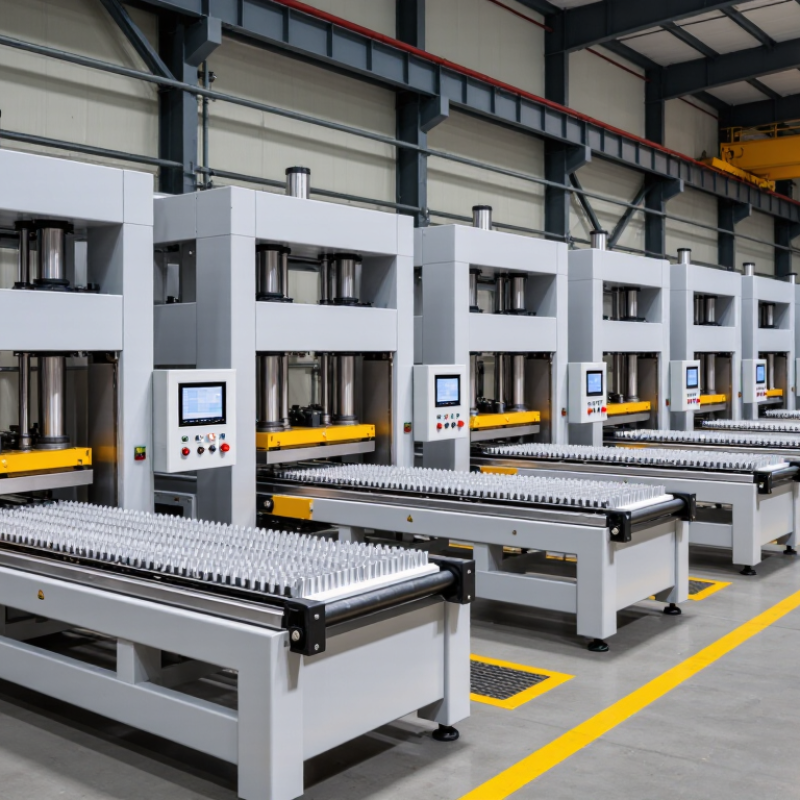
7 Best Aluminum Fin Press Machines for Global Buyers

Aluminum Fin Press Machines: Purpose, Structure, and Working Principles

An aluminum fin press forms thin metal strips into repeated fins for heat exchangers, air conditioners, and refrigeration units. The machine improves surface area, helping coils transfer heat more efficiently. The International Energy Agency reports that space-cooling energy demand could more than triple by 2050. That trend increases pressure on manufacturers to produce consistent, compact coil components.

Its structure usually includes a decoiler, straightener, feeder, stamping die, cutting unit, and control system. The feeder advances aluminum strip at a fixed pitch. Then, the die punches louvers, collars, or serrations in rapid cycles. The forming station creates the fin profile, while the cutter controls length.

Accuracy matters. A small pitch error can misalign an entire coil.

According to the International Aluminium Institute, global primary aluminum production reached about 70.6 million tonnes in 2023. This large supply supports broad industrial use, but material quality still varies by alloy, temper, and thickness. Operators should check strip flatness before pressing. They should also measure fin height, pitch, burrs, and scrap rate during production. In practice, lubrication settings often need adjustment. Perfect settings rarely arrive on the first trial.

Tips: Confirm the press tonnage, feed speed, die life, and compatible strip thickness before purchase. Request sample parts, not only machine photographs. Review maintenance access and guarding carefully. A fast machine is not always the best machine.

Key Specifications for Comparing Aluminum Fin Press Machines

7 Best Aluminum Fin Press Machines for Global Buyers
Key Specifications for Comparing Aluminum Fin Press Machines

When comparing aluminum fin press machines, start with usable press force, not the advertised maximum. Force must match alloy, strip thickness, fin height, and forming method. A machine rated for 80 tons may perform poorly with deep fins or hard aluminum. Ask for sample production using your actual coil material.

Check fin pitch, height range, strip width, and dimensional tolerance. These figures affect heat-transfer performance and downstream assembly.

Stroke rate also matters, but published cycles may assume ideal conditions. In factory trials, real output often falls after tooling changes or material adjustments. Measure finished parts per hour, including setup time.

Tooling flexibility can separate a practical machine from an expensive problem. Look for quick die changes, accessible guides, and adjustable feed length.

Servo feeding can improve pitch accuracy and reduce material waste. Hydraulic systems may offer strong forming force, yet they can require more maintenance. Inspect noise levels, energy use, lubrication points, and emergency-stop access.

Small details matter. Very much.

Ask about spare tooling, operator training, electrical compatibility, and service response across borders. Confirm the machine accepts your local voltage and meets applicable safety requirements. Request inspection records, tolerance reports, and test videos with clear measurements. I would not trust speed claims without production data. A careful buyer should compare total operating cost, because the cheapest purchase can become the least reliable investment.

Seven Top Aluminum Fin Press Machines for International Buyers

For international buyers, the seven top aluminum fin press machines are not identical in purpose. High-speed mechanical presses suit large heat-exchanger lines, while servo presses offer finer control during frequent product changes. Hydraulic models provide strong forming force for thicker stock. Compact pneumatic units can serve smaller workshops, but their output may disappoint at scale. Progressive-die presses reduce handling, although tooling costs deserve close inspection.

The International Aluminium Institute reported about 70.6 million tonnes of primary aluminum production in 2023. That volume reflects sustained demand across transport, cooling, and construction. Its recycling research also notes that recycled aluminum uses roughly 5% of the energy required for primary production. A press with stable feeding, low scrap rates, and adjustable stroke control can support that efficiency goal. Check coil width, fin height, material thickness, cycle speed, and die compatibility before comparing quotations. Small details matter.

Energy use should not be judged from brochure figures alone. Request measured noise, power consumption, uptime, and maintenance records from comparable installations. ISO 12100 risk-assessment principles can guide machinery safety reviews, while local electrical requirements still vary. I would rank servo control highly for global buyers, but not automatically. It may add complexity and service demands. A lower-cost machine can become expensive when spare parts cross borders slowly. That risk is easy to underestimate.

Matching Press Types to Production Volume and Fin Design

7 Best Aluminum Fin Press Machines for Global Buyers

Matching Press Types to Production Volume and Fin Design

Choosing an aluminum fin press begins with production volume, not catalog appearance. High-volume lines usually suit mechanical presses with fast, repeatable strokes. They work well for standard heat exchanger fins, especially with stable material thickness and simple pitches. Keep it simple.

For variable fin heights, louver patterns, or frequent design changes, servo presses offer better control. Their adjustable stroke and feed settings can reduce setup waste. However, they often require skilled technicians and careful programming. A hydraulic press may suit deeper forming or unusual profiles, but its slower cycle can limit output. This trade-off matters when buyers compare hourly capacity, not only purchase price.

Tooling quality can change the result dramatically. Check die alignment, strip feeding accuracy, vibration control, and access for maintenance. Measure twice. A press that handles 300 strokes per minute may still fail production targets if the feeder slips or scrap removal stops. Request trial data using your aluminum alloy and actual fin geometry. Ask for dimensional reports, noise readings, spare-part availability, and operator training details. I would not pretend one press fits every factory. A compact machine may be wiser for moderate volume, while a rigid high-speed system supports continuous production. Leave room for honest doubt, especially when forecasts depend on untested customer orders.

7 Best Aluminum Fin Press Machines for Global Buyers

Typical aluminum fin output by press type. Use lower-speed machines for deep, delicate, or prototype fin designs, and higher-speed systems for continuous high-volume production.

The figures represent commonly used industry planning ranges in fins per minute and vary with fin height, pitch, material thickness, strip width, tooling layout, and the number of parts produced per stroke.

Global Purchasing, Installation, Safety, and Maintenance Considerations

Global buyers evaluating aluminum fin press machines should begin with production facts, not catalog promises. Check fin width, material thickness, strip speed, press force, tooling range, and expected output. Ask for verified test data using aluminum similar to your own coil stock. A machine designed for thin fins may struggle with harder alloys or frequent tooling changes. Confirm electrical frequency, voltage, control language, spare-part availability, and export documentation before placing an order. Small mismatches can create expensive delays.

Installation requires a level foundation, sufficient working clearance, and reliable lifting equipment. Follow the supplier’s technical drawings, but verify them against your factory layout. Keep guards, light curtains, emergency stops, and access doors functional during commissioning. Operators should receive practical training on threading, die adjustment, pressure settings, and abnormal noise. Never bypass a safety device to increase output. It may save minutes and create serious risk.

Maintenance records should include lubrication dates, die inspections, sensor checks, oil condition, and alignment measurements. Remove aluminum chips before they enter guides or electrical cabinets. Inspect cutting edges regularly; dull tooling can produce burrs and uneven fin spacing. Store critical seals, sensors, and fasteners under controlled conditions. Remote support is useful, but local technicians still need clear procedures and drawings. A perfect checklist does not exist. In practice, teams often overlook cleaning around the feeder, especially during busy shifts. That weak habit deserves correction.

Scroll to Top
Scroll to Top