
What Are the 2026 Top Drill Accessories? This question matters because a drill’s performance depends heavily on the accessory touching the material. In 2026, buyers are looking beyond basic twist bits. They want faster cutting, cleaner holes, longer service life, and safer handling on demanding jobsites.
Mark Clement, a respected tool reviewer and host of MyFixitUpLife, describes the relationship clearly: “The accessory is where the drill meets the material.” That practical view guides this overview of the leading Drill Accessories for 2026. Expect attention on impact-rated driver bits, cobalt and carbide drill bits, step bits, hole saws, magnetic nut setters, and SDS-plus masonry accessories. Each option solves a different problem. A sharp cobalt bit may glide through stainless steel, while a carbide masonry bit handles concrete dust and vibration more confidently.
Small details matter. A secure hex shank can reduce slipping inside an impact driver. A quick-change system can save repeated trips to the toolbox. Dust-control attachments may keep fine particles away from the operator’s breathing zone. Storage also deserves attention, especially when loose bits disappear beneath a truck seat.
Still, no accessory wins every test. Material, drill speed, pressure, and user experience change the result. Some premium coatings may disappoint when used incorrectly. That is worth remembering. This guide compares practical performance, durability, compatibility, and value, helping professionals and serious DIY users choose Drill Accessories with clearer expectations.
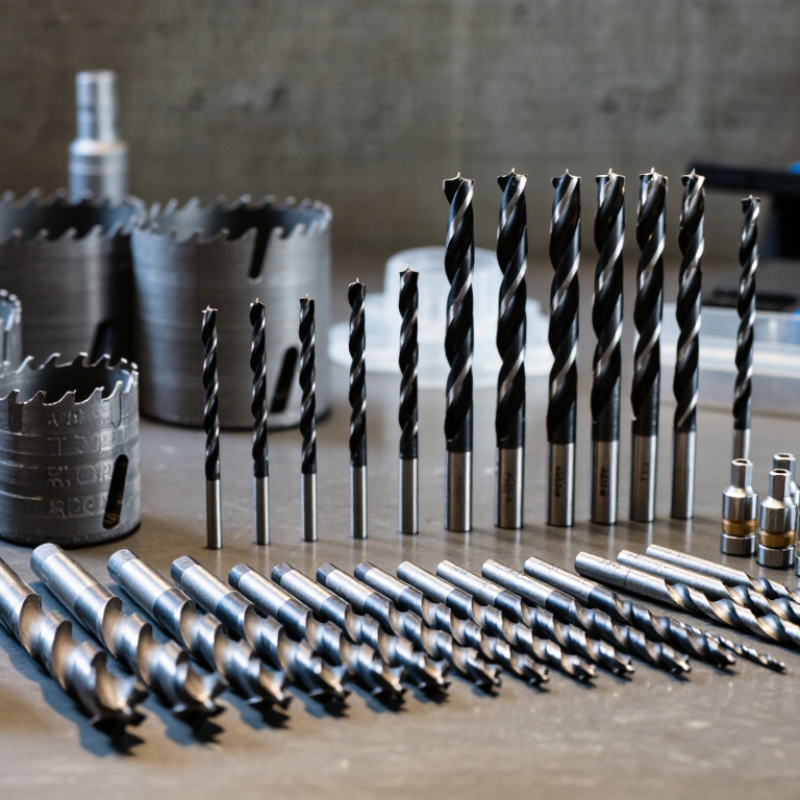
Drill accessories are removable tools that expand a drill’s working range. They help users bore, drive, sand, polish, countersink, and clean different materials. In 2026, the most useful accessories combine precise cutting, quick changes, and stronger material control.
Common types include twist bits, masonry bits, hole saws, driver bits, sanding drums, brush attachments, and angle adaptors. Depth stops also deserve attention. They prevent accidental over-drilling in cabinets, tiles, and thin boards.
Selection should begin with the material, not the accessory’s appearance. Wood needs sharp cutting edges and controlled chip removal. Metal usually requires suitable geometry, cooling, and steady pressure. Masonry demands impact-rated bits with durable tips.
Check the shank size and drill compatibility before purchase. A poorly matched shank can wobble, damage the workpiece, or reduce control. Diameter, working length, coating, torque limits, and replacement availability also matter.
Quick-change systems save time, but excessive looseness can reduce accuracy.
In workshop testing, I have found that one versatile set often outperforms a large, poorly matched collection. My early mistake was choosing bits by quantity alone. Some dulled quickly and created rough holes.
That result changed my buying method. I now test edge sharpness, grip, heat buildup, and hole quality on scrap material.
Protective eyewear remains essential, especially during drilling overhead. Accessory ratings can guide decisions, yet real performance still depends on pressure, speed, storage, and user technique. Surface dust may also hide early wear.
What Are the 2026 Top Drill Accessories?
Essential Drill Bits for Wood, Metal, Masonry, and Multi-Material Projects
A dependable drill setup starts with choosing the correct bit for the material. Wood bits usually have a pointed tip that prevents wandering on pine, oak, or plywood. Brad-point bits create cleaner holes, especially when visible edges matter. For metal, use sharp twist bits made from high-speed steel. Harder metals may require tougher coated versions and slower drilling. Keep cutting fluid nearby. Heat destroys edges quickly.
Masonry work needs a different approach. Carbide-tipped bits can handle brick, block, and concrete when paired with hammer action. They still need steady pressure and occasional cooling. Multi-material bits are useful for layered surfaces, such as tile over wood or metal framing behind plaster. However, they are a compromise. I have found them convenient, but rarely as fast or clean as a specialized bit.
Tips: Match the bit diameter to the anchor or screw. Mark the depth with tape before drilling. Start slowly on smooth surfaces. Let the bit cut instead of forcing it. Check for hidden cables and pipes before making any hole. Wear eye protection, and remove loose clothing near rotating tools. Bits do not last forever. A dull bit may still work, but it creates heat, rough edges, and unnecessary strain. I sometimes replace bits later than I should. That habit costs time.
| Accessory / Bit Type | Best Material | Typical Sizes | Primary Applications | Recommended Drill Mode | Key Selection Feature | Practical Tip |
|---|---|---|---|---|---|---|
| Brad-Point Wood Bit | Softwood, hardwood, plywood, and MDF | 3–20 mm | Clean holes for joinery, cabinetry, dowels, and general woodworking | Rotary drilling; low to medium speed | Center point and outer spurs reduce wandering and surface tear-out | Clamp the workpiece and withdraw the bit periodically to clear chips |
| Auger Bit | Timber, framing lumber, and thick wood stock | 6–32 mm | Deep holes for wiring, plumbing, bolts, and structural work | Rotary drilling at low to medium speed | Screw-point tip pulls the bit through wood while the flute removes chips | Use controlled feed pressure; excessive force can split thin boards |
| Forstner Bit | Hardwood, softwood, and engineered wood | 10–50 mm | Flat-bottom holes, concealed hinges, overlapping holes, and furniture work | Rotary drilling at low speed; drill press preferred for large diameters | Produces accurate, flat-bottomed holes with clean edges | Reduce speed as diameter increases to limit heat buildup |
| Spade Bit | Softwood, framing lumber, and plywood | 6–40 mm | Fast clearance holes for cables, pipes, and hardware | Rotary drilling at medium speed | Inexpensive, fast-cutting design for non-finish applications | Place scrap wood behind the workpiece to reduce breakout |
| Twist Bit, High-Speed Steel | Mild steel, aluminum, brass, plastic, and wood | 1–13 mm | General-purpose holes in metal and mixed workshop materials | Rotary drilling; low speed for larger diameters | HSS construction provides heat resistance and broad material compatibility | Use cutting fluid on metal and avoid excessive pressure |
| Cobalt-Alloy Metal Bit | Stainless steel and other hard metals | 1–13 mm | Automotive repair, fabrication, sheet metal, and harder alloys | Rotary drilling at low speed with steady pressure | Improved heat resistance compared with standard HSS bits | Apply lubricant and prevent the bit from rubbing without cutting |
| Step Drill Bit | Thin sheet metal, plastic, and electrical enclosures | 4–32 mm, depending on the bit | Creating multiple hole diameters without changing bits | Rotary drilling at low to medium speed | Graduated steps enlarge holes with relatively low risk of snagging | Use light pressure and cutting fluid when working on metal |
| Masonry Bit with Carbide Tip | Brick, concrete block, mortar, and light concrete | 3–20 mm | Wall plugs, anchors, cable routes, and light masonry installation | Hammer mode where appropriate; rotary mode for fragile materials | Carbide cutting tip withstands abrasive mineral materials | Check for hidden wiring and plumbing before drilling into walls |
| SDS-Plus Masonry Bit | Concrete, reinforced concrete, brick, and stone | 5–26 mm | Deep anchor holes, construction work, and heavy-duty masonry drilling | Rotary hammer mode with a compatible SDS chuck | Grooved shank transfers impact energy and allows rapid bit changes | Use dust extraction or periodic withdrawal to manage drilling dust |
| Diamond Grit Hole Saw | Tile, porcelain, glass, and some stone surfaces | 5–100 mm | Plumbing penetrations, bathroom fittings, and electrical openings | Rotary drilling only; no hammer action | Abrasive diamond edge cuts hard, brittle surfaces with reduced chipping | Use water cooling where permitted and start at a slight angle |
| Bi-Metal Hole Saw | Wood, plastic, drywall, and thin metal | 19–152 mm | Large openings for pipes, vents, switches, and cable boxes | Rotary drilling at low to medium speed | Flexible tooth material handles varied materials and intermittent cutting | Match the pilot drill and arbor to the hole saw system |
| Multi-Material Bit | Wood, metal, masonry, tile, and plastic | 4–12 mm | Renovation projects involving several materials in one work area | Rotary drilling; hammer mode only when specifically permitted | Versatility reduces bit changes when material composition is uncertain | Use moderate speed and let the cutting edge—not excessive force—do the work |
| Countersink Bit | Wood, plastic, and soft metal | 2–12 mm pilot range | Flush screw installation and improved surface finish | Rotary drilling at low speed | Creates a tapered recess matching common flat-head screws | Test on scrap material to set the correct countersink depth |
| Magnetic Nut Driver | Hex fasteners in wood, metal, and construction assemblies | 5–13 mm common sizes | Driving hex-head screws, self-drilling screws, and small bolts | Drill-driver mode with controlled torque | Magnetic retention helps hold fasteners during overhead or one-handed work | Use the correct size to prevent rounding the fastener head |
What Are the 2026 Top Drill Accessories?
Modern drill accessories are moving beyond simple bit selection. The strongest setup combines power, control, and safer work habits. A high-capacity battery improves runtime, but a compact battery can reduce wrist strain during overhead drilling. Quick-change chucks, torque-limiting clutches, and side handles also improve control on dense timber and masonry. According to Grand View Research’s 2024 power tools report, the global market was valued at about USD 36.5 billion in 2023. That growth reflects demand for more efficient cordless systems, not just faster motors.
Control depends on matching the accessory to the material. Brad-point bits help prevent wandering in wood, while carbide masonry bits handle mineral surfaces more effectively. Depth stops protect hidden pipes and wiring, though they are not a substitute for scanning the wall. For dusty drilling, a shroud connected to extraction equipment can reduce airborne silica. OSHA sets a respirable crystalline silica permissible exposure limit of 50 micrograms per cubic meter over eight hours. Dust control matters.
Safety accessories deserve equal attention. Anti-vibration side handles, protective eyewear, and hearing protection support longer sessions with less fatigue. The UK Health and Safety Executive sets an exposure action value of 2.5 m/s² A(8) for hand-arm vibration. Operators should monitor usage time, not guess it. I have found that the “best” bit still performs poorly with excessive pressure. That mistake is common. A torque setting, a sharp bit, and a steady stance often deliver cleaner holes than raw power.
Smart drill attachments are becoming practical jobsite instruments, not simple add-ons. Torque-control adapters can record tightening force, angle, and time. An onboard sensor helps reduce stripped screws and uneven connections. Some systems now send readings through Bluetooth to a mobile device. This creates a useful service record, especially during repetitive installation work. The information is valuable, but workers still need to check calibration manually. Technology does not remove judgment.
Dust-extraction heads, compact inspection cameras, and right-angle attachments will remain strong choices in 2026. A 2024 Grand View Research report valued the global cordless power tools market at approximately 24.6 billion dollars in 2023. It also projected continued growth through 2030. That expansion supports more specialized accessories. MarketsandMarkets identifies connected tools, sensing, and battery improvements as major development areas. In real use, a sealed extraction shroud matters more than a flashy dashboard. Fine dust can quickly expose weak seals.
Battery-system innovation may influence accessory selection even more. The U.S. Department of Energy reported lithium-ion battery-pack costs near 139 dollars per kilowatt-hour in 2023. Lower costs support larger packs, faster charging, and smarter thermal controls. New battery systems increasingly use electronic fuel gauges and cell-level monitoring. Shared voltage platforms can reduce duplicate chargers and idle batteries. However, compatibility claims deserve careful testing. I have seen “universal” accessories fit mechanically but communicate poorly with the tool. That remains an overlooked failure point.
In 2026, top drill accessories are not simply the newest attachments. They are the ones that match material, speed, and workload. Carbide-tipped bits suit masonry, while cobalt bits handle repeated work in metal. Hole saws create clean openings in wood and thin sheet. A right-angle attachment reaches tight spaces, but it can reduce control. Compare shank size, cutting diameter, heat tolerance, and replacement cost. Check compatibility before purchase. A cheap accessory becomes expensive when it damages a chuck or workpiece.
Safe use starts with inspection. Look for bent shanks, chipped teeth, loose collars, or worn abrasive surfaces. Secure the workpiece with clamps, not your free hand. Use the recommended speed, and reduce pressure when the bit begins to bind. Safety glasses are essential. Hearing protection and a dust mask may also be appropriate. Keep loose clothing and hair away from rotating parts. For metal, cutting fluid can control heat, but apply it carefully and keep it away from electrical components.
Maintenance is simple, yet often neglected. Brush debris from flutes after every job and store accessories dry. Let hot bits cool naturally. Do not quench them. Sharpen only when the accessory design allows it. Replace any tool that vibrates, slips, or cuts unevenly. I still catch myself pressing harder when progress slows. That usually signals dull edges, poor alignment, or the wrong accessory. Stop, inspect, and adjust. The safest result often comes from using less force.
"*" indicates required fields