
Carbon Tube selection is becoming more demanding for global buyers in 2026. Applications now range from lightweight bicycle frames and robotic arms to industrial heating systems. Each use requires a different balance of strength, stiffness, weight, conductivity, and cost. A tube that performs well in an aircraft component may be unsuitable for a high-temperature furnace.
This guide examines the leading Carbon Tube types available to international purchasers. It considers pultruded, wound, molded, braided, and custom-engineered designs. Fiber direction matters. So does resin chemistry. Buyers should review wall thickness, diameter tolerance, surface finish, and load data before comparing quotations. Independent test reports can reveal differences that product photographs hide. Supplier audits, production records, and traceable batch information also support more reliable decisions.
Real procurement experience shows that the lowest price is rarely the complete answer. Shipping conditions, packaging quality, minimum order quantities, and replacement lead times can change the final cost. A practical evaluation should include compression strength, impact resistance, thermal exposure, and joining methods. Not every supplier publishes enough technical evidence. That is a weakness worth noticing.
Standards and application requirements must be checked for each market. Engineers should confirm whether the tube meets relevant performance, safety, and quality expectations. This article does not treat one material as universally superior. Instead, it compares useful options while recognizing that test methods may differ between manufacturers. Careful questions remain essential. A confident purchase begins with verified data, realistic service conditions, and a supplier willing to explain limitations.
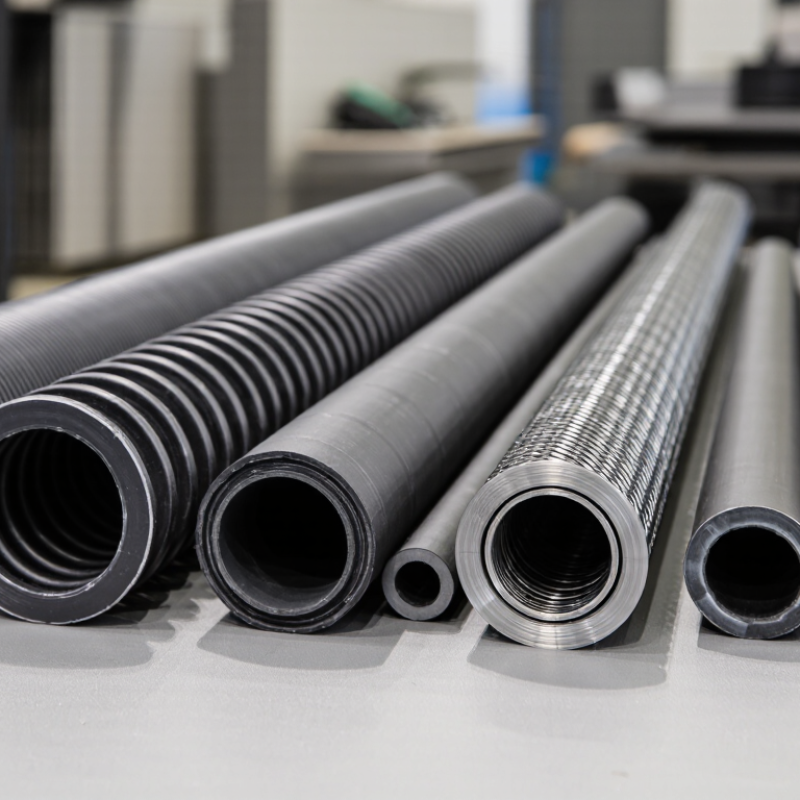
Graphite tubes are machined from carbon graphite and offer useful conductivity, chemical resistance, and thermal stability. They suit furnace supports, heating systems, and laboratory fixtures.
Carbon-fiber tubes use continuous or woven fibers inside a resin matrix. They provide low weight, high stiffness, and directional strength for structural parts. Their resin limits service temperature, a detail that buyers sometimes overlook. Not every lightweight tube is suitable for heat.
Carbon-carbon tubes combine carbon fibers with a carbon matrix. They can retain strength at extreme temperatures, especially in controlled atmospheres.
Manufacturing quality depends on fiber architecture, densification, surface treatment, and dimensional accuracy. In supplier evaluations, request wall-thickness tolerances, fiber orientation data, porosity results, and temperature test conditions.
Comparing catalog values alone is unreliable. A practical sample test may reveal machining dust, uneven surfaces, or unexpected brittleness. Specifications need context.
2026 Top Carbon Tube Types for Global Buyers
SWCNT and MWCNT Sizes: Typical Diameters from 0.7 to 50 Nanometers
Carbon nanotubes are not one-size-fits-all materials. Single-wall carbon nanotubes, or SWCNTs, usually measure about 0.7–2 nanometers in diameter. Their narrow structure supports high electrical performance, but it also increases dispersion difficulty. Small differences can matter.
Multi-wall carbon nanotubes, or MWCNTs, commonly range from 5 to 50 nanometers. Technical industry reports published for 2024–2034 place most commercial MWCNT grades in the 10–30 nanometer range. Larger tubes may offer easier handling and stronger mechanical reinforcement. They can, however, create more visible surface texture in coatings and composites.
A 2024 carbon nanotube market assessment links demand growth to conductive plastics, batteries, sensors, and lightweight structural materials. The same reviews emphasize that diameter alone cannot predict performance. Wall number, length, purity, defects, and agglomeration also influence results. Buyer specifications should therefore request microscopy data, not only a nominal size.
In practical testing, a 1-nanometer SWCNT may disperse differently from another tube with the same stated diameter. That is an uncomfortable detail. Supplier descriptions are sometimes too broad. Global buyers should compare measurement methods, batch variation, and certificate data before approving production quantities.
| Carbon Tube Type | Typical Outer Diameter | Number of Graphene Walls | Typical Length | Aspect Ratio | Electrical Behavior | Thermal Conductivity | Typical Purity Range | Common Global Buyer Applications | Key Purchasing Considerations |
|---|---|---|---|---|---|---|---|---|---|
| Single-Walled Carbon Nanotube (SWCNT) | 0.7–1.4 nm | One cylindrical graphene wall | 1–20 µm | Approximately 1,000–20,000 | Can be metallic or semiconducting, depending on chirality | Very high along the tube axis; reported values vary substantially with defects, alignment, and measurement method | 90–99 wt.% carbon nanotube content, depending on purification level | Transparent conductive films, nanoscale electronics research, sensors, field-emission devices, high-performance composites | Chirality distribution, metallic-to-semiconducting ratio, residual catalyst, bundle size, dispersion quality, and length distribution |
| Single-Walled Carbon Nanotube (SWCNT) | 1.4–2.5 nm | One cylindrical graphene wall | 1–50 µm | Approximately 500–35,000 | Mixed metallic and semiconducting behavior; electrical performance depends strongly on sorting and alignment | High axial thermal transport; practical composite performance depends on interfacial resistance and network formation | 85–99 wt.% carbon nanotube content | Conductive additives, flexible electronics, electrochemical electrodes, structural nanocomposites, research-grade sensor platforms | Need for individualized tubes versus bundles, dispersant compatibility, surface functionalization, and acceptable amorphous-carbon content |
| Few-Walled Carbon Nanotube (FWCNT) | 2–5 nm | Usually 2–5 graphene walls | 2–30 µm | Approximately 1,000–15,000 | Generally conductive; electrical response depends on wall structure, defects, and network density | High axial thermal transport with good mechanical reinforcement potential | 90–98 wt.% carbon nanotube content | Conductive polymer compounds, electromagnetic-interference shielding, battery and supercapacitor electrodes, coatings | Wall-number distribution, outer diameter, aggregate size, defect level, bulk density, and compatibility with the host matrix |
| Multi-Walled Carbon Nanotube (MWCNT) | 5–10 nm | Typically 5–15 concentric graphene walls | 1–30 µm | Approximately 500–6,000 | Usually electrically conductive and less sensitive to chirality than SWCNTs | High axial thermal conductivity; effective composite values are lower because of tube-to-tube and interface resistance | 90–99 wt.% carbon nanotube content | Antistatic plastics, conductive adhesives, lithium-ion battery electrodes, supercapacitors, sensors, and thermal-interface compounds | Outer and inner diameter, catalyst residues, oxidation treatment, dispersion stability, and percolation threshold in the target formulation |
| Multi-Walled Carbon Nanotube (MWCNT) | 10–20 nm | Typically 10–30 concentric graphene walls | 2–50 µm | Approximately 200–5,000 | Typically conductive; performance is influenced by graphitization, defects, and contact resistance | High axial heat transport, with practical values affected by alignment and matrix adhesion | 85–99 wt.% carbon nanotube content | Conductive thermoplastics, rubber reinforcement, industrial coatings, EMI shielding, filtration media, and energy-storage components | Graphitization degree, tube length, powder flowability, moisture content, surface treatment, and regulatory documentation |
| Multi-Walled Carbon Nanotube (MWCNT) | 20–50 nm | Typically 20–60 or more concentric graphene walls | 2–40 µm | Approximately 100–2,000 | Conductive with comparatively robust current-carrying behavior in polymer and coating networks | Good axial thermal transport; bulk composite performance depends strongly on orientation and interfacial bonding | 80–98 wt.% carbon nanotube content | Large-scale conductive compounds, cement and ceramic additives, industrial rubber, shielding materials, and mechanically reinforced plastics | Lower surface-area-to-volume ratio than smaller tubes, dispersion energy, aggregate control, ash content, and processing equipment compatibility |
| Carboxyl-Functionalized SWCNT | 0.7–3 nm | One graphene wall with surface carboxyl groups | 0.5–20 µm | Approximately 200–25,000 | Conductive, but functionalization can increase defect density and alter charge transport | Usually lower than pristine SWCNTs because covalent defects interrupt the graphitic lattice | Typically 85–98 wt.% nanotube content, with functional-group loading reported separately | Water-dispersible sensors, biosensing platforms, membrane materials, polymer coupling, and aqueous electrode processing | Carboxyl loading, acid residues, pH stability, dispersion medium, tube shortening, and batch-to-batch functionalization consistency |
| Carboxyl-Functionalized MWCNT | 10–50 nm | Multiple concentric graphene walls with surface carboxyl groups | 0.5–30 µm | Approximately 100–3,000 | Conductive; oxidation treatment may increase contact resistance while improving interfacial bonding | Reduced from pristine MWCNT levels according to oxidation severity and defect concentration | Typically 85–98 wt.% nanotube content, with oxygen content specified separately | Water-based coatings, cement and polymer composites, electrochemical sensors, membranes, and functional nanocomposites | Oxygen content, acid-washing residues, pH, zeta potential, dispersion stability, tube integrity, and compatibility with the binder |
Note: The values shown are representative technical ranges for material selection and comparison, not guaranteed specifications. Actual diameter, length, purity, wall count, conductivity, and thermal performance vary with synthesis method, purification, functionalization, measurement technique, and batch.
Carbon-fiber tubes with 55–65% fiber volume balance stiffness, strength, and manufacturability. This range is widely used for demanding structural applications. Higher fiber content can improve load transfer, but only with accurate consolidation and controlled resin distribution.
The U.S. Department of Energy’s lightweight-materials assessments report that carbon-fiber composites can reduce component weight substantially compared with steel. Their density commonly remains near 1.6–2.0 g/cm³, while tensile strength may exceed 3 GPa in qualified laminates. Specific strength is the real advantage. A lighter tube can carry serious loads.
Still, fiber volume alone does not guarantee performance. Industry testing guidance, including ASTM D3039 and ASTM D6641, supports tensile and compression evaluation. Buyers should also request void-content data, wall-thickness tolerances, and fiber-angle records. MarketsandMarkets’ carbon-fiber industry forecast identifies aerospace, mobility, and wind-energy equipment as major demand sectors through the decade. These sectors usually require repeatable quality, not impressive figures alone.
A practical warning matters. Tubes with 65% fiber volume may become harder to process and inspect. Small voids can weaken compression performance. Ends may need local reinforcement. Ask for batch-level test results. Check the actual tube, not only the datasheet.
In 2026, graphite tubes remain important for furnaces, crystal growth, and high-temperature testing. They can serve from 1,800 to 3,000°C in inert gas or vacuum. However, the temperature rating is not universal. Wall thickness, purity, heating time, pressure, and mechanical load change real performance. At 3,000°C, sublimation, distortion, and contamination require careful control.
The ASM Handbook, Volume 21, identifies graphite’s high-temperature stability and low thermal expansion as key engineering advantages. The USGS Mineral Commodity Summaries 2025 estimated global natural graphite mine production at about 1.6 million metric tons in 2024. That figure highlights material availability, but it does not prove tube quality. Buyers should request density, ash content, grain structure, and electrical resistivity data. A rating alone can mislead.
Tips: Match tube design to the actual thermal cycle, not only the peak temperature. Use fine-grain, high-purity graphite for sensitive furnace zones. Check whether the supplier tested performance under vacuum, inert gas, or both. Measure tube ovality after use. Small distortions can affect heating uniformity. I would also allow a safety margin below 3,000°C, because laboratory conditions rarely remain perfectly stable.
2026 Top Carbon Tube Types for Global Buyers
Global Buyer Standards: ASTM D3039, ISO 527, Tolerances, and MOQ
Carbon tubes are commonly produced by pultrusion, roll wrapping, or filament winding. Each method changes strength, surface finish, and dimensional stability. Global buyers should request the manufacturing method before comparing prices. A low-cost tube may use a different fiber direction. That difference matters under bending or compression.
ASTM D3039 and ISO 527 provide tensile testing frameworks for composite materials and plastics. They do not automatically certify every finished tube. Test specimens, fixtures, wall geometry, and fiber orientation can affect results. Ask whether data comes from a flat laminate, a machined tube section, or the actual production tube. This detail is often missed. It should not be.
Dimensional tolerances need written values. Specify outside diameter, inside diameter, wall thickness, straightness, cut length, and surface defects. For example, a 30-millimeter tube with a 1-millimeter wall needs tighter inspection than a simple catalog description suggests. Request inspection records for each lot, not only a single sample. Traceable batch numbers improve reliability. They also expose inconsistent resin content or uneven curing. One practical weakness remains: buyers sometimes accept broad tolerances to reduce cost, then face assembly problems later. MOQ should be linked to tooling, color, length, and testing requirements. A smaller trial order can reveal hidden variation before full production.
Indicative commercial wall-thickness ranges by carbon tube construction method
Pultruded tubes are commonly selected for consistent profiles and cost efficiency, while roll-wrapped tubes provide better fiber-orientation control for lightweight structural parts. Filament-wound tubes are suitable for larger diameters and pressure-oriented designs, and braided tubes are used where impact tolerance and multidirectional reinforcement are important.
ASTM D3039 and ISO 527 are tensile-testing standards for polymer-matrix composite materials; they do not define universal carbon-tube dimensions, tolerances, or minimum order quantities. Buyers should approve the test direction, specimen preparation, dimensional tolerance, and MOQ in the drawing or purchase specification.
| Tube type | Typical commercial MOQ | Buyer checkpoint |
|---|---|---|
| Pultruded | Approx. 10–100 pieces | Profile consistency and length tolerance |
| Roll-wrapped | Approx. 10–50 pieces | Fiber orientation, surface finish, and wall uniformity |
| Filament-wound | Approx. 5–30 pieces | Winding angle, diameter, and pressure-load requirements |
| Braided | Approx. 10–50 pieces | Impact performance, braid angle, and resin consolidation |
Commercial ranges are indicative market benchmarks rather than universal standards. Confirm final dimensions, tolerances, testing, and MOQ with the supplier before purchase.
"*" indicates required fields